

Conversations about power and progress
Two decades at Microsoft and P&G, then the side door into venture. On the one-percent problem, the East Coast opportunity, and why persistence is the only strategy that scales.
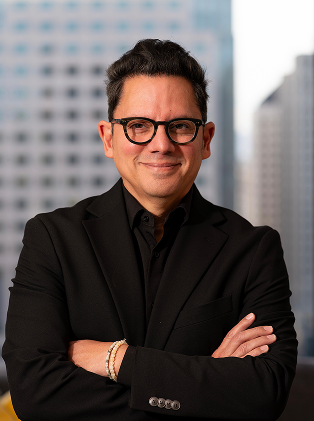
Transcript
Transcript kept in the language it was spoken.All right, so I think we are live and welcome everyone to The Corridor. This is the first episode ever of The Corridor — a podcast to have conversations about people who are doing work in the corridor: for Puerto Rico, for Latinos, for everyone in between who is interested in this space. And in today's first episode, I have José Piñero, and I couldn't have a better first guest — a fellow Puerto Rican, and of course very embedded in the VC and startup world.
I want to start with something that might catch people off guard, because when people hear "executive director of a Latino VC nonprofit," they picture a specific kind of background. And you have a very interesting one. You come from Microsoft, Procter & Gamble, 20-plus years in corporate leadership. So how does a guy like you end up doing this?
First of all, Angel, thank you so much for having me. I am thrilled to be on your first ever episode of The Corridor. What you're doing is so needed. I commend you for doing this work to empower people, bring the message, and open the corridors — so we can have traffic, so we can have people creating, growing, and succeeding.
Mira, I am Puerto Rican, I am Boricua, I was born in Puerto Rico, and I have been pretty lucky with my career. When I think of myself, my career is about helping people like you and me and your audience get access to the rooms we were not always invited to. My personal motto is: I want to leave things better than I found them. I want our kids and the future generations of Latinos, Latinas and Puerto Ricans to have the same or better opportunities than us. So all this work is about providing resources, access, information, best practices, advice, coaching, support — so that our people can achieve more success.
I finished high school in Puerto Rico, in Isla Verde, then went to Cornell for undergrad, Georgetown for an MBA, and then Procter & Gamble for a few years — loved it, did marketing and brand management. Then somebody from Microsoft found me at a Hispanic MBA conference in Los Angeles. A few months later I was moving to Seattle. Microsoft was a wonderful experience — big leagues, growing company. I did marketing, product strategy. They sent me back to Puerto Rico to lead marketing for the Caribbean. Then at some point they asked me to lead diversity and multicultural marketing for the entire company.
That job changed my life. I became the voice of Microsoft not only to the Latino community but to African-Americans, women, LGBTQ, people with different abilities — all of those groups. And in that job, my eyes were opened. The opportunities for people like us are not the same. I could not accept it. I made a conscious decision: this is my life mission. I need to be a conduit, a bridge, a corridor. Since then — about 20 years ago — my career has been about making a difference, empowering people, and building bridges. In the last year, my focus has been on using capital as a lever. Because the money decides who gets funded, who creates companies, who has the decision-making power. That's why I'm leading Somos VC, a 501(c)(3) nonprofit focused on helping Latinos, Latinas and allies succeed in capital.
That's why I wanted you on the first one — because you have that pep, that passion. There are not that many people in the world like that, and you're one of them. You started with Somos VC not that long ago — September 2025. So you're relatively new to the seat. When you first got there, what was the first thing that surprised you about the actual state of the work you signed up for?
I suspected it was analogous to the corporate world — not enough Latinos and Latinas at the high level. But what was surprising was the exact numbers. Right now, if you look at all the VC firms with more than $100 million in AUM, 79% of those firms don't have any Latinos or Latinas. If you look at Latinos and Latinas across all investment professionals in the US, we are only 1.6% — less than 2% at firms managing over $100 million.
So the question became: how do we make a difference? That's why Somos does this work. We have professional development programs. We have a fellowship to bring people into the venture profession. We have Avanza for pre-partner VCs to get to the next level. We have mentorship to help people from the mid- to upper level. The actual numbers were lower than I expected.
You're nationally recognized as a top coach for Latinos, and you created something called the Latino Career Test. That work is about helping individual people navigate a system that was not built for them. Somos VC is about changing the system itself. Those feel like different bets — how do you connect them?
My main focus right now is to grow Latinos and Latinas in venture. My day job is Somos VC and I love it — the community, the people, how smart everyone is, how many people want to make a difference. I'm in Oakland right now. Yesterday we did an event where we brought the Black community together with BLCK VC and the Somos VC community to plan how we can affect policy — legislation, lawmakers, education — so there will be more programs that help us.
I've done a lot of coaching for companies — Nike, Netflix, TikTok, Meta, Merck, Ford, Amazon, Microsoft. I give a lot of speeches and seminars. And the Latino Career Test — I thought, there's Myers-Briggs, there's the Enneagram, there isn't one just for Latinos. So I created it. It has seven archetypes, and people can see, "I'm a colibrí, I'm a jaguar — that's why I act the way I act." It's insight to help people make better decisions. But I'm super focused on driving capital and bringing more of our people into the industry.
Before we go deeper — a guy from a Microsoft and P&G background, running a Latino VC nonprofit. At any point, did family or friends say, "José, what are you doing?" It's not a traditional transition.
I'm here to make a difference. I'm here to make things better for people like us, to create better opportunities for our kids and the generations coming. It's all connected by the same thread: leaving things better, educating, supporting, empowering our people. Sometimes people underestimate us. Look at Bad Bunny — underestimated. People thought he was just a rap singer. Look what he has done. There's an opportunity to put a spotlight on the people who are role models and creating new opportunities. So it all makes sense to me.
People joke that I've moved so many times they've lost track of where I'm living. I was in Puerto Rico for the last two years. I just moved back to Washington State. Early next year I'll go back and forth. It's all good.
Let's get deeper into the data. You said less than 2% of partner-level investment professionals are Latinos, in a country where 20% of us are Latino. And 86% of institutional VC firms have zero Latino investment team members. When you say those numbers out loud in the room, what reaction do you get?
People are surprised. That's the first reaction. Second reaction: they start asking, "What can we do? We don't know where to start." That's where we come in. The lack of Latinos in VC is not because of a lack of talent — it's because of a lack of access and a lack of visibility. At Somos we're building the infrastructure for the next generation of VCs, and we want Latinos to be part of that.
When I talk to a lot of VCs and ask, "How did you get into this career?" the answers I get the most are, "I met somebody," or, "I knew somebody," or, "A friend told me about a job." People are essentially falling into this career. What if we do deliberate, proactive programs and say: here's the roadmap. If you're good at X, Y and Z, here are potential entry points. If you're interested in entrepreneurship, become a founder or an operator. If you're a senior operator, become an angel investor. There are many ways, but we have to tell people, because up to now it has been random.
So we work across the full capital stack — talent and money. Bring more people into the career, help them grow, put a spotlight on emerging managers on fund one, two, three.
That's why we do the Emerging Manager Showcase. We did it two weeks ago in Los Angeles to highlight five emerging managers, so more investors put money in. It's a lot of work — connecting investors, GPs, LPs, founders, ecosystem leaders — so we can say: here's a good path for most people. Let's build it, promote it, help more people.
Research is very important. We're building the next wave of the research now. We'll release it in the next couple of months. I'm dying to see the numbers — to see how much things have changed.
Somos VC has been building this for years, and you've already been there for some time. This is your time to brag a little. What has actually changed since Somos VC started, and what will be different five years from now?
Visibility, access, relationships — those are the levers. Everything else is downstream.
We have very strong, solid professional development programs in place — the Fellowship, the Mentorship, Avanza, the Summit, the Emerging Manager Showcase. Some of them are on version three or four. For the Emerging Manager Showcase, we got about 50 applicants and chose the top five. We're doing a good job showing them. We need to do more to bring LPs — the investors — to connect with the GPs and emerging managers.
We're also growing the data side. Data tells the story, and it's a compelling one. I don't think investors should invest in Latino GPs or emerging managers just because it's a nice thing to do. They should do it because there's alpha. There's opportunity that other managers may not see, because we have access to different founders, different networks, different relationships. It's good business — better results, better distribution. We also want to grow policy work and expand the programs.
There's the case for investing in Latino-led funds. It's not just a diversity argument — there's a market-access argument, there's alpha. So why is the broader VC industry still not responding? What do you think is the real reason?
The infrastructure for visibility is not there. And this industry is based on networks and relationships. Somebody meets you today and thinks, "Great person, great work." If you're raising a fund, they're not writing a check three months from now. They're going to keep in touch, watch what you're building, watch your traction, build the relationship and the trust. You plant the seeds now so somebody writes a check to you one, two, three years from now. It's a small industry in that sense. People care about the relationships.
So we have to get people into the funnel. We put a spotlight on them, connect LPs to GPs, do small events and dinners where people share experiences. People like to do business with people they like and people they trust. And Latinos and Latinas — we were not always invited into those spaces. There's also something interesting: this industry loves pattern recognition. They love familiarity. If you didn't go to Stanford or Harvard, if you didn't follow the same cookie-cutter path, it's harder for people to make the connection. So we have to work harder to make the intro, the connection, the relationship.
Let's talk more about what Somos VC actually does day to day. People hear "nonprofit" and they picture awareness campaigns, but your programs are operational. Walk me through the program stack — and if you had to pick, which is the most underrated?
Somos VC runs like a startup — a small team with virtual assistants and support. We run a series of professional development programs to get people into the career and accelerate their growth. On top of that, we do advocacy — sharing the message, putting a spotlight on emerging managers, creating bridges so GPs and LPs can connect. We're also looking at the ecosystem to understand where the gaps are — where people fall through.
The Fellowship is probably one of our leading programs. Every year we bring new people into the venture capital profession. About 65 people have gone through the program, and the great majority are investors or professionals at the mid- to upper-mid level in VC firms. We have people on our board who connected with someone through the Fellowship. It's super successful and I'm looking for ways to increase its reach.
The Mentorship connects mid-level people with senior people, so they have somebody they can talk to for feedback. There's a great story: Monique Villa-Capra created Daytrip Ventures and is now on our board. She's where she is today because she participated in the Somos VC mentorship — we connected her with Miriam Rivera.
Miriam is the co-founder of Ulu Ventures — one of the most successful Latina venture capitalists in the world, a wonderful person. Because we connected Monique with Miriam, Monique is now launching her own fund after a very successful career.
Then there's Avanza — for pre-partner VCs to get to the next level. We just did the Emerging Manager Showcase. We're doing the policy work. The Mentorship runs, the Fellowship runs in the fall, and we do the Summit where we bring our whole community together. We also have the power to convene — we can bring in super-senior LPs and GPs. Rock stars like Santi Subotovsky spoke at our event. José Fernández, a fellow Puerto Rican, co-founder and former CEO of StepStone, spoke at our event two weeks ago. Having direct access to leaders like that is really valuable.
We run like an organization — programs, operations, marketing, and yes, fundraising, because we need to fund the operation. But it feels more like a startup than a nonprofit, because we're moving.
The Emerging Manager Showcase is designed to help fund managers access capital. What is the biggest barrier that Latino fund managers face right now versus non-Latino ones?
Fundraising for VCs right now is difficult. There has been contraction in the number of firms. And if you look at PitchBook data, 65% of all VC deals last year went to AI. So if you weren't in AI, it was really hard to get money.
The biggest challenge for underrepresented managers — Latino or Black — is that we haven't had access to some of the rooms and some of the conversations. We're catching up. When things get tight, people run toward familiarity, toward what they know, toward what is proven. And in VC, firms look at each other: "Who leads the round? Are you going in? Then I go in." Almost nobody wants to go alone. So having those relationships is more important than ever. A lot of it is access, visibility, and building the infrastructure to get people into the rooms and the conversations.
It feels like the Latino VC story is more of a West Coast story. In the East Coast — New York, Miami, Chicago — where much of the diaspora actually lives, it feels like the conversation is missing. Do you agree? And why?
I looked at the data a couple of days ago. The biggest market is the West Coast. Second is New York. Third is Miami. Our own composition — we have tons of people in Miami, tons in New York. We do a lot of events in California and I'm thinking I need to do something in New York pretty soon.
It's pretty much the same issue across the board. We have great people like Samara Mejía Hernández from Chingona Ventures in Chicago. Because of the concentration — AI, and a big chunk of the deals going to the mega-large firms, the a16z's of the world — networks matter even more. So we have to work harder at nurturing them. If Latino investors and emerging managers aren't connected to the platforms and decision makers, the gap grows. I'm here to make that gap smaller and to build bridges, like you're doing with The Corridor.
Let me know when you come to New York — let's do an event together. On a more personal note: what's the most unexpected place you ever found a great founder — someone where you thought, how did I miss this person?
Let me give you a slightly different answer. I've been in conversations where someone tells you their idea and it sounds a little unlikely — low probability of success. A long time ago I'd think, this isn't going to happen. I have been wrong. Some people had crazy dreams, and a year later they built the thing, launched it, created the company.
I was talking to somebody yesterday — I first talked to him and his co-founder during the pandemic, 2020. He told me his dream, and I wasn't sure. They did it. They raised their first fund, and now they're raising their second. The lesson: don't underestimate somebody who has drive and commitment. Many times, they will find a way. If a door closes, they look for a window. If one path doesn't work, they try another.
That's important for us Latinos and Puerto Ricans. We tend to take the no too easily. We pitch, they say "I'm not sure," and we say, "Well, doesn't work — let me do something else." We need to be more persistent. Angel, you and I and founders and investors — we are in the rejection business. You ask 100 people, 97 will say no. When you're raising a fund or funding a startup, three will say yes, but you don't know if it's person three, person 47, or person 96.
In our culture — and I talk about this a lot when I speak about Latino values — we worry too much about what people will think, about looking like a failure, about feeling bad. We need to be more persistent and say: another no gets me closer to a yes. Nobody I've met who has achieved something amazing did it without failure. Sometimes brutal failure. It's a story of failure after failure until they stumble on something that works. Feel bad for a day, then get going, try something different.
You guys are doing amazing work at Somos VC. What does it look like for Somos VC over the next 10 years? What do you picture the ecosystem looking like?
I want to significantly increase the number of Latinos and Latinas in the VC profession. I want to significantly increase the AUM they're managing. I want to see more companies funded. When members of the Somos VC community — Latino-led firms — invest, 48% of the founders they back are from a diverse background or people of color. So we tend to invest in more diverse founders, and those founders hire more people. It compounds.
I want Somos VC to be the definitive infrastructure platform for Latinos and Latinas in venture. I want us to have the data, the resources, the systems that connect the network. I'm building the infrastructure for this to live for the next 10 years or more. I want any young, smart person interested in entrepreneurship or investment to say, "Where do I go?" — and come to us. We'll give them the tools and accelerate their network.
I want to see more Latino billionaires. More Latino successful exits. More Latinos saying, "Because I was here, I was able to fund all these amazing things." We do work with foundations — yesterday we did an event with the Kapor Foundation, one of our partners. They have the resources to drive business, help create companies, support nonprofits like us, and improve communities. I have big dreams for this, and we're just getting started.
To close the Somos VC section: 10 years from now — what has to change at the institutional level? LPs, funds, structures, university pipelines — for any of this to actually stick?
The next step is stronger LP integration. LPs love exploring ideas and looking at new opportunities. We are kind of an untapped market. I'm having a call with an LP right after this meeting because we're designing the program so that it's easy for LPs to connect with GPs.
On the institutional side, here's the challenge. The big pension funds — CalPERS, the teachers' associations — because they are huge, they aren't set up to invest in emerging managers. José Fernández said a couple of weeks ago that they rarely invest in a fund smaller than $100 million. So getting more emerging managers institutionally ready is farther out. The big opportunity is LP engagement. Get more visibility for those managers, and the network effect happens — more LPs get involved, they tell other LPs, it grows.
And then data. I love data, I love research. We're looking at how to optimize this — not only to share a snapshot of where we are, but to clearly identify where the issues are, where people fall through, where somebody has a hard time going from fund one to fund two, and what we can do about it.
One last question before we go, because I know you like music. The first time I met you, you had an AC/DC shirt on. So this is totally off topic — if Somos VC were a song, what song would it be?
Great question. Let me think.
Here's the answer: a song from Queen. I'm a big fan of Queen — Freddie Mercury, Brian May, Roger Taylor, John Deacon. The song is "Don't Stop Me Now." The chorus: "Don't stop me now, I'm having such a good time, I'm having a ball."
We're getting going. We have great momentum. I love the community. There's a lot of energy. We grew the board of the organization. We created a senior advisory board with amazing leaders — Tom Chávez, Miriam Rivera, Samara Mejía Hernández, Sergio Robles, Víctor Echevarría, Dan Portillo, Rami Reyes — top Latino VCs. And we know there is so much we need to do and can do. Momentum brings more momentum. Speed, taking action, responsiveness — that's huge. That's why I'm choosing "Don't Stop Me Now."
José, this was great. Thank you for telling us your story and for the work you're doing with Somos VC. Before we go — how can people connect with you, and where can they find you?
My request to your audience: if you're a Latino, Latina or ally, please join Somos VC. Get involved, sign up for the newsletter, follow us on LinkedIn, support each other. Stop working in isolation. I want more LPs to take meetings with us. I want you to be part of this community.
Follow us on LinkedIn — Somos VC. Check our website. If you have anything, write to me directly on LinkedIn or at jose@somos.vc. Things happen when people are committed to taking action, when people are driven, persistent, relentless. There's a huge opportunity for us. I want more of us to succeed and become the role models for the next generation. So please, join us. And if you have any ideas — anything you think we should be doing — reach out. The best ideas come from different places.
Amazing. Thank you, José. Everyone, connect with José if it's relevant to you. This was the first episode of The Corridor — the podcast where we have conversations with the people doing the work in the corridor, for all Latinos. José, thank you for being here.
Thank you so much. Thank you for doing this work, Angel. This is super important. Thank you for being a voice representing us. I wish you great success.
Corridor Context
Somos VC is building the infrastructure — fellowships, emerging manager support, data, policy — behind Latino participation in US venture capital, where Latino investment professionals still make up under 2% of firms managing over $100M.