

The same ladder at every rung
How the capital markets ladder looks identical at every rung, from the first pre-seed check to the closing IPO bell, and why Latino founders need investors who have stood at both ends.
Transcript
Transcript kept in the language it was spoken.All right. So welcome to the corridor. My name is Angel Leon, your host. And most investors have seen one side of the journey only. My guest today has seen both. before she ever wrote a venture check, Laura Moreno Lucas was a managing director at Nasdaq, where she basically led the IPOs for Beyond Meat, right? Lyft, Airbnb, The RealReal and
maybe a couple other ones I may forgetting. and she stood at that finish line. the bell, the public listing, the whole thing, right? the that moment where a company becomes a household name, basically. today she's a general partner at Latitude Ventures, which is basically, I believe, the largest early stage fund in the country investing in US Latino founders, where basically she writes some of the earliest checks these companies will ever receive. she's a founder herself.
she built and exited a company and now she wrote a book as well that called Latinas in VC basically to bring you know more women into this world, of course. so she's seen basically the entire ladder from the first check to that closing bell. so Laura, welcome to the corridor.
Thank you, Angel. I'm so happy to be here and coming in live from Hawaii
Nice. Love it. Beautiful place. And you have one of the you know, most enviable, I would say, seats in finance, right? You took Airbnb, Lyft, Beyond Meat you took all these companies public, and that's sort of like a mountain, mountaintop, right? And then from that you move to the earliest stages, right, of the journey possible, writing those first checks into Latino founders.
Why did you walk away from you know from that finish line to go stand at the starting line again?
Yeah, no, that's it. Thank you for that question. I think what is important to understand is the capital markets journey, whether it's at the early stage or the later stage, what I call the entire capital ladder. It's different, but it's the same. And what I mean by that is that
At the later stage, you're looking to take companies public when you reach these billion dollar milestones. But in essence, what you're doing there is a lot of what you did when you started the company. You're trying to reach a huge amount of people in a customer base. And you're telling the world, hey, I am here in a structured way where you guys can all be a part of my journey. And now you have to explain to them why.
Right? Why should they be a part of your journey? A lot of times you go on what's called a road show when you go out to meet investors to tell them why you believe that you're ready to be a public company and why they should be a part of your journey before the IPO. And then after you're publicly listed, then you again, go out and say, share that same story with the world on, you know, why they should invest in you.
And that is the same thing that you do when you start a company at the pre-seed stage, right? Why should investors and why should your first customer be a part of your journey and how you're going to really solve the problem that you're set out to do? So I found it very interesting that even at the highest level, the same process happens when you're really trying to, you know, bring people over to help them understand what you're building.
how you're going to bring them along and why they should be a part of your journey in the company, whether it's private or public. Of course, there's different risk levels when you're a public company, you have the backing of Wall Street and the public markets. When you're private, you have the backing of the private market. So there's different infrastructure there, but essentially the story is the same.
Very super interesting. And our audience already never or barely, you know, gets to hear this right or see this from one single person doing all these things, right? You've seen that whole path, the seed series A, all the way to the public listings. When you look at a Latino founder racing their first round today, what do you see that they can't see yet about the climb ahead of them?
You know, I think when founders, whether you're Latino or not, if you knew the journey that you had ahead of you, probably wouldn't start the company. So one of the things that I consistently saw in, let's just say, Brian Chesky, the founder of Airbnb or Brian, the founder of
I know what it is with these Brian's, but Brian, founder of Lyft or even, you know, the founder of the real real Julie. They're all incredibly passionate about the problem that they're solving. And that problem will change. The problem will change because the world changes, but the fundamental problem and how they're thinking about, they're so passionate about that.
that they're not going to stop and they will endure, you know, different economic challenges. They will endure macro changes. They will endure, you know, ups and downs. But solving that is so essential to them that they will just keep going in that aspect. So when you think about, you know, how the RealReal started, it was a consignment model that
They said, hey, we want to take more consignment and really start bringing that as a luxury option to the world so that we have this recycle model that is part of the ecosystem so that we don't have so much, you know, fast fashion out in the world. And we have luxury, good things that we're offering clients. And so she, she started that on a small scale. She brought it into retail. She brought it into a.
you know, national platform that was technology based. So she found all these mediums on how to do it and how to deliver that to the customer. But at the end of the day, the problem that she was trying to solve is that the fast fashion world and the luxury market, there is such abundance of stuff out there that can be usable for everybody. And we don't need
fast fashion to solve this problem. need to look at the things that we have and we need to recycle them, reuse them, share them with the world. And that's still, you know, The RealReal today. It's bringing some of that luxury fashion to market and helping that recycle through our ecosystem instead of going and buying more of the things that we don't need. And if you look at Airbnb, you know, it started with basically
couch surfing and now it's, you know, with being able to bring together in these incredible locations like Hawaii, I mean, the Airbnb, right? You know, and you just, that he's still obsessed with that. How that's being offered has changed, how the world see that has changed, but he's still solving that, allowing people to move freely in these incredible places and being able to do that on a broad scale.
So I'd say that to any founder, it's really think about the customer you're serving, how you want to start this, and you have to have the passion to endure, endure, and endure because the times are going to change and you have to change with them.
Okay. That's how you how are you?
Interesting. And Latitude is basically one of the largest fund right of its kind specifically. and I know you're an advocate and you've said it before that Latinos are, you know, one in four basically, right? New entrepreneurs and they drive a huge share of the GDP growth here in the US. So when a Latino founder comes to you, what actually makes you, you know, lean in, right? And
And what's that thing you feel that you see too many of them get wrong?
So the, you know, when Sol started Latitude Ventures, I joined shortly after the fund was founded. It was on the premise that, you know, Latinos generally didn't have access to capital in a massive way. You know, we'd get little checks here and there, but really to catalyze companies.
and be able to bring our solutions to market that were equally as sound as what others were bringing to market. We needed real capital. We needed million dollar checks. We needed funding that would help us scale and move through, again, that capital ladder ecosystem. And so with that investment in mind and really looking at the ecosystem of Latino founders that were in the market,
I mean, it was incredible to see the talent that was coming to us and the solutions that they were trying to solve. Because what I was seeing is they were looking at it from a very different perspective. Because a lot of times they were born in other countries, they're immigrants, they come to the US and whether they're first time in the US or second generation, how they see the world is a little bit different.
I think that at a baseline, understanding that and how they're approaching things and understanding some of the solutions that they're bringing, that creativity aspect of it, because we do have a creative aspect to how we solve problems, is sometimes cultural. We know how to address these things because we understand the culture behind what we're building. And so that's the thing that
that trust factor allows for. It's like, okay, you whether it was a financial services solution that is helping to solve some of the unbanked in the world, right? We know there's so many people in the world that don't have the same access to banking products because of the requirements that you need to have that. But we understand that and we can help find solutions to solve that. Or whether it's, you know, healthcare solutions for our...
community that generally people don't have access to or have high premiums. So if you come to us with an innovative solution, we understand it and we understand the problem that is that you're trying to solve. So I think that's it. It's we understand a lot of the major problems that have been in our community and how our founders are thinking about solving them. And then once we understand that, that some of the other
investors don't because just we just have the cultural nuance and understanding of our community, then you put everything else behind it. Can it scale? Is it is this a problem that we can solve? Can we support it? Can we help it become, you know, a billion dollar company? And how is that going to be approached on a go to market strategy? How can we accelerate that go to market strategy? Well, how does our network unlock that? Because a lot of it, you know, also is about the network that
can help support these ecosystems. And so that is a major thing that I think, you know, us as partners, as an ecosystem has helped develop because we have access to different networks that didn't, you know, maybe founders didn't have. And so we can help unlock those opportunities and scale them quicker. So it was capital, it was network.
It was helping these founders understand how to scale quickly and support them. then with all of those things and resources, I think we have been able to invest in over 40 companies and now deploy $65 million that is being put to work out there and seeing these companies grow.
The capital markets journey, whether it's at the early stage or the later stage, what I call the entire capital ladder. It's different, but it's the same.
Very cool. And you're you're not just, you know, an investor, like I mentioned at the beginning, you also built and exited your own company, right? and we see this a lot in you know in VC, especially nowadays, right? A lot of these founders exit companies, they turn VCs or they turn investors, right? And then they sort of want to give back. So I want to dig a little bit more into who you are as a founder inside the investor, right? And
It's really important. And I think that's a lot of the reasons why founders become investors is because we understand the challenges of scaling companies from zero to an exit. And there's so much that involved besides just raising money and having an opportunity on solving a problem. It's like people management, which is the biggest thing.
than driving growth, all of these things. I think if you were to ask any one of the founders that know me and that I have a relationship with, I think that they would all say that I'm very trusted, I'm very transparent, and I empathize with their journey. So whether they hit a roadblock and it's...
it's going to be something that's gonna be challenging. I try not to come down on them for it. I try to find solutions to help them unlock what's gonna happen next so that they can get past that. Because like what I said earlier, the world is gonna keep moving and everything's gonna change. And the only thing that you can do is figure out how to adjust the problem you're solving to the world that's continuing to move around you and then finding solutions for that. So it's thinking about.
how to empower them to find the solution in giving them those options and knowing that I'm a partner that they can talk to in the worst case scenarios because I think a lot of times, maybe a venture is seen as, they only care about the returns, they only care about the returns and the returns aren't important, right? But how you approach that and communicate the challenges through what's coming and how you work through that.
I think is the most important. And that gets out really quickly because once founders feel supported, then they bring other founders to you and they say, hey, work with this investor because they are not only about capital, but they really help support you through the tough times. everybody's there when you're making a lot of money, but when, you know, you have these tough times, it's, you know, who can you call? Who can really help guide you through these tough times? So.
Yeah, I think that's one of the biggest things that I've learned is just got to be real. And it's not about judgment. It's just about what do we do when we're at these points that are real critical to a make or break moment? How do we show up for them?
And what's that thesis for a lot of two ventures, right? What is the right the magic one perfect startup and founder you guys are looking for right now that that you're investing in?
Yeah, so right now, just in terms of latitude, so I'm part of Latitude Ventures Fund 2, which is $100 million. We've deployed the capital, so we're fully invested out of Fund 2. There's another fund that's going to be raised for Fund 3. I'm actually launching another fund called the Libra Fund, which was part of the Libra Leaders Network, which is a women's network that is builders and buyers. And what that means is we're built
bringing the builders, startup founders that are women-led and connecting them with the other side of the ecosystem, which is the buyers, which is whether you're in healthcare, whether you're in financial services or workforce solutions, we're connecting the dots there because we understand that's the best way to not only support the founders that are women, but also to help them scale.
and then help them get to market quickly. So that is the Libra Fund. And so that's a $50 million vehicle. We're looking to do our first close by the end of this year. And that's something that we're really excited about. And in terms of that fund, the way that we look at founders is there three...
types of founders that we're very interested in supporting. And this is because there are so many of these coming to market and accelerating the growth in the sector of AI and automation. It's engineers that are women engineers, scientists that are women scientists and former operators, people that are spinning out of these tech companies that are finding solutions that, you know, they're coming to the table with that they can help scale and grow because they've seen the problems themselves.
operating in these roles. So those are the three types of founders that we're looking for because we know that in that aspect, they have the ability to, we can help support them, whether it's with additional team members on the engineering side, on the scientist side, similarly on the operator side, because of the talent and the builders and buyer network that we that we're supporting, but also because we'll be able to help.
on hey, how do you get this again to go to market quickly and connect the dots while you're scaling your business, which is, you know, all founders need that guidance to really hit that enterprise level and start to go to the next stage of growth, which in the past, actually, women had not gone past series A in a significant way. So I'm excited, even though I'm investing at the early stage, my whole
thought in this is if we start connecting the builders and buyers, they will naturally be able to get through that growth stage because there will be women on the other side that have the seniority that will help them pull through that capital ladder. So this is really exciting. Again, AI and automation is the key driver of lot of this, but the industries that are being most impacted and have the biggest opportunity are healthcare, financial services, and workforce solutions.
Very cool. And to I guess along to, you know, in that topic, you wrote the Latinas in VC, the book, and you basically spotlighted there, thirty-one women investors, right? and most most conversations focused on getting more diverse founders founders funded. but you went to the other side of the table, who's who's writing the checks, right? What does what does that side matter just as much?
Well, unfortunately, what I learned is not a lot of people knew who they were. And that was the biggest thing that we need more visibility. With what I was trying to do there is, again, because I'm in the position that I am, I also was seeing a lot of opportunities. And these are incredible women that are building, Latinas or not Latinas.
And I would continue to see how overqualified they were, what an incredible company that they were building, but they weren't getting the funding for it. So I said, hey, do you know, you know, this other investor, that's what they invest in. And 90 % of the time they would say, no, I don't know them. I would be shocked because they would name, you know, all the mainstream VC funds, but they would never find these other.
women investors who had significant capital, who were looking at these deals, who were actually driving capital in these ecosystems. And it's because they didn't get the visibility. So the book is really a combination of not only helping founders find other women investors in our ecosystem that are Latina, but also highlighting these incredible Latina MVCs.
that have capital that are actually deploying. then in that visibility then would also then drive one step further showing limited partners or institutional investors. Here's a fantastic ecosystem that hasn't even hit your radar because again, we don't get that visibility. You don't see us on CNBC. You don't see us in major media. So this was a way for me to continue to highlight these incredible women.
that have capital that are allocating, that are investing and trying to connect all the dots. And that book has been incredible. It was supported by Silicon Valley Bank and they've been a great partner. They've also agreed that we're gonna continue that momentum and bring this into a digital format. So hopefully tell the stories of a lot of these women investors on a platform that we would be able to continue highlighting their growth.
Very cool. now it's very refreshing that you actually mentioned about the the visibility because that's something that I have experienced myself, speci specifically, you know, with a lot of the Puerto Rican founders, as well from my side, that yeah, you know, they don't they don't know the community. and vice versa, right? the community doesn't know them. And a lot of them
just the same, you know, the same reaction that you had to me just sort of blew my mind. Like how do you not know? You know, the Latino VC ecosystem is not that big, you know? So for you to like not know maybe, you know, one or two, okay. But for you to not know like most of it and not know some of the top brands are out there, like Latitude, Chingona, right? All these different ones, it to me is mind blowing. Like, like how do you not find them?
And to me that was very interesting. And I feel that it's also part of, you know, what Latinos were experiencing right now in terms of access, right, to resources and just access to being in the room, right? but not only that, again, like just the connective tissue between that. So who's doing the work to connect one or the other, right? So if one doesn't go towards the other, the other one doesn't go towards this one, then nothing happens.
and that's one of the things that I actually wanted to build myself with Coqui Ventures is specifically that, you know, try to build that connective tissue to start connecting founders more and more with the VC ecosystem, right? so it's very refreshing to hear that someone else is also, you know, experiencing the same questions and the same conversations, right, with these founders. and for you as you know, as a as a venture capital
capitalist right in the Latino world specifically. have you like what have you seen that has changed right in the past let's say five to ten years that maybe Latino founders didn't have access to maybe 15, 20 years ago?
mean, there's more of us. So there's definitely, you know, when I when I was, when I was raising my startup, there was maybe one other person, and I'm gonna name drop him Jesse Martinez, he's in the Bay Area, and now he's in Houston. That was it. I only knew one Jesse Martinez, and that was it. And he was one running around trying to connect me. you don't know.
You know, there's this one Latina, one Latina at Google. I'm like, oh, the one Latina. I'm like, yes, please connect me to this one Latina. So it was empty back then in 2009. And now, I mean, it's just there's more of us. There's more of us in venture. I mean, I was just talking to Jose from Somos, BC, you know, and how that community has grown. We didn't have a Somos, BC.
Wow.
You can't miss it, right?
Like there wasn't a resource group like that. We didn't have an NAA. We didn't have an NAIC that focuses on our ecosystem. So it's all of these different organizations that have realized, yeah, there's growth here. They need to be supportive. There's capital. Like I mentioned in that book, we are now allocators of capital, not only as investors, but also in just, you know, just in terms of
what we're doing here in the United States and how much we're deploying and consuming. So we are now at points in the economy where we are the drivers of the assets and the wealth creation. And so that's a very different narrative that we haven't been a part of in the past. And so that's why it's an incredible time for Latinos in the United States because
we have now reached different levels that we're able to actually influence how these things not only get invested in, but grown, driven, and then brought to the public. So it's exciting to see. I would love, just because of my time at NASDAQ, I would love to see more Latinos at IPO. And I know it's hard, but that would be.
you know, great to see more Latinas, more just women in general. once we start seeing that tide change and really tip the scales of capital is what I always say on the Libra side is then things I think will get better and they are getting better. They've definitely changed. Even with women, there were no women resources back then. And now there's a lot of different resource groups. There's not enough.
You know, do we need more? Yes. But it's at least we're there on the other side to help address problems, to help strategize, to help how to grow, to help really drive. And we have to do that together. So the only other thing I would say to that is there are more, but we have to be aligned in the mission on what we're trying to build now that we're more and we have to do it together because there's too much
of, hey, we can't have this scarcity mindset because if we're only getting, you know, this much of the bigger pie, we can't have that scarcity mindset. We have to get the bigger pie. Right? Yeah.
Period. Yeah. Definitely. Definitely. I love that. Well, thank you so much, Laura, for taking the time today. I really enjoyed a conversation, learning about your journey, your story, pretty powerful. And again, you know, my goal with this podcast is to do exactly that, is to showcase women like you and founders like you and investors like you, that are doing things out there, right? And we hear a lot of the
of the complaint, right? But one thing I didn't hear today was actually you complaining about anything, right? which that's that's one thing I love about, you know, people that just push forward, right? And just people that, okay, we get it. Yeah, I know we're we're small. Okay, so what? Right? what are we gonna do about it? Rather than keep weeping right on the on the same thing. and I feel that's an attitude you know that a lot of us have to
to adopt, you know, that yeah, we're small, yeah, this, yeah, that, whatever, we have this little one. Okay. That's all that's all sad and and wrong in many, you know, in many ways. But at the end of the day, you know, we have a great community, right? Latinos, we're a pretty embracing community. we're a very loving community. And I feel that, you know, that plays a big part in who we are as a as a race in general.
and what separates us from a lot of other right background races out there as well. So I think that we should, you know, embrace that. And like you said, share more, right? Communicate more, help more. you know, there's so many opportunities as well that I feel a lot of people miss on because they just don't know about them, right? Like people in corporate world or people with specific expertise or skills or talents, right, that
They have no idea that they could potentially be an advisor for a startup and get, you know, a little something out of that, right? They have no idea what how these things work. and I feel that we need a lot more of that, you know. I feel that there's we do have a lot of expertise and experts and leaders out there in the world, you know, in all kinds of industries. So again, I really appreciate your story. It was v you know, very powerful, and very moving to, you know, again to just see someone coming from
Backgrounds that we come from, right? And do all the amazing things that you've done. and very interesting, you know, how to me it was very, very interesting what you said that the journey basically of exiting a company is sort of like starting a company all over again, right? In terms of how okay, this is this was all great, but let's look back at the problem again. Are you really solving that problem, right? which at the end of the day, it's all you know, one of the things that I talked
the most about with founders, right? Like do you really have a problem, a big problem to solve, right? that is one of the main things investors are looking for. so I really again, thank you so much. I appreciate you taking the time and being here and share, you know, your amazing story.
Thank you, Angel
Thank you. And one last question before before we go. And this is something I ask everyone. just a piece of advice for any Latino founder that's listening to this right now, right, who's at that very bottom of the ladder. first check, no track record, just the conviction, right, of who they are and what they're building. What's one thing you tell them?
One thing I would tell them is just keep pushing and take the shot. A lot of things that I've been able to do is because I actually took that next step. I reached out, I followed up, I actually went to the thing that someone else didn't show up at. So it does take that extra step, but I think if you continue to do the things and move in that motion, it'll eventually...
result in something because a lot of life, regardless of whether it's at work, it's about showing up, right? In relationships, for family, for friends, for work. So it's just showing up and taking that extra step. It's just doing the things that you need to do to keep things moving forward.
As long as you're moving it forward, maybe some days you might not get traction, the next day you are. I remember when I had my, my startup, I always thought, you know, one day I'm like, my God, I've, I've done it. I've reached the billion dollar mark. No, the next day I was having to lay off people, but then the next day things turned around. So it's just got to keep pushing and just continue to move things forward. And that's what I would say, even if it doesn't seem like it is.
Right, right.
Thank you, Laura That was amazing. Thank you so much again. And to everyone listening to this, this was The Corridor, the podcast where we basically interview investors, founders, builders, operators, and anyone in between that's building in the venture corridor of the Latino community. So again, thank you, Laura for being here. And and enjoy Hawaii as well. Very nice, place
Thank you.
Corridor Context
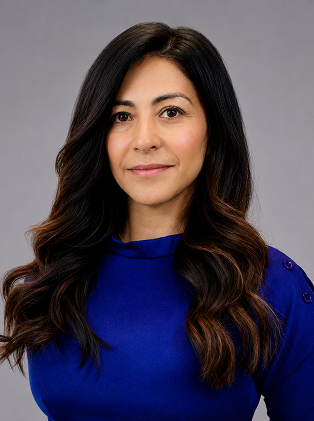
Laura Moreno Lucas is a general partner at Latitude Ventures, the largest early-stage fund in the United States investing in US Latino founders. Before venture, she was a managing director at Nasdaq, where she led IPOs for Beyond Meat, Lyft, Airbnb, and The RealReal. She is a former founder with an exit, and the author of Latinas in VC, a book spotlighting thirty-one women investors reshaping access to capital.