

From the fields to the stars
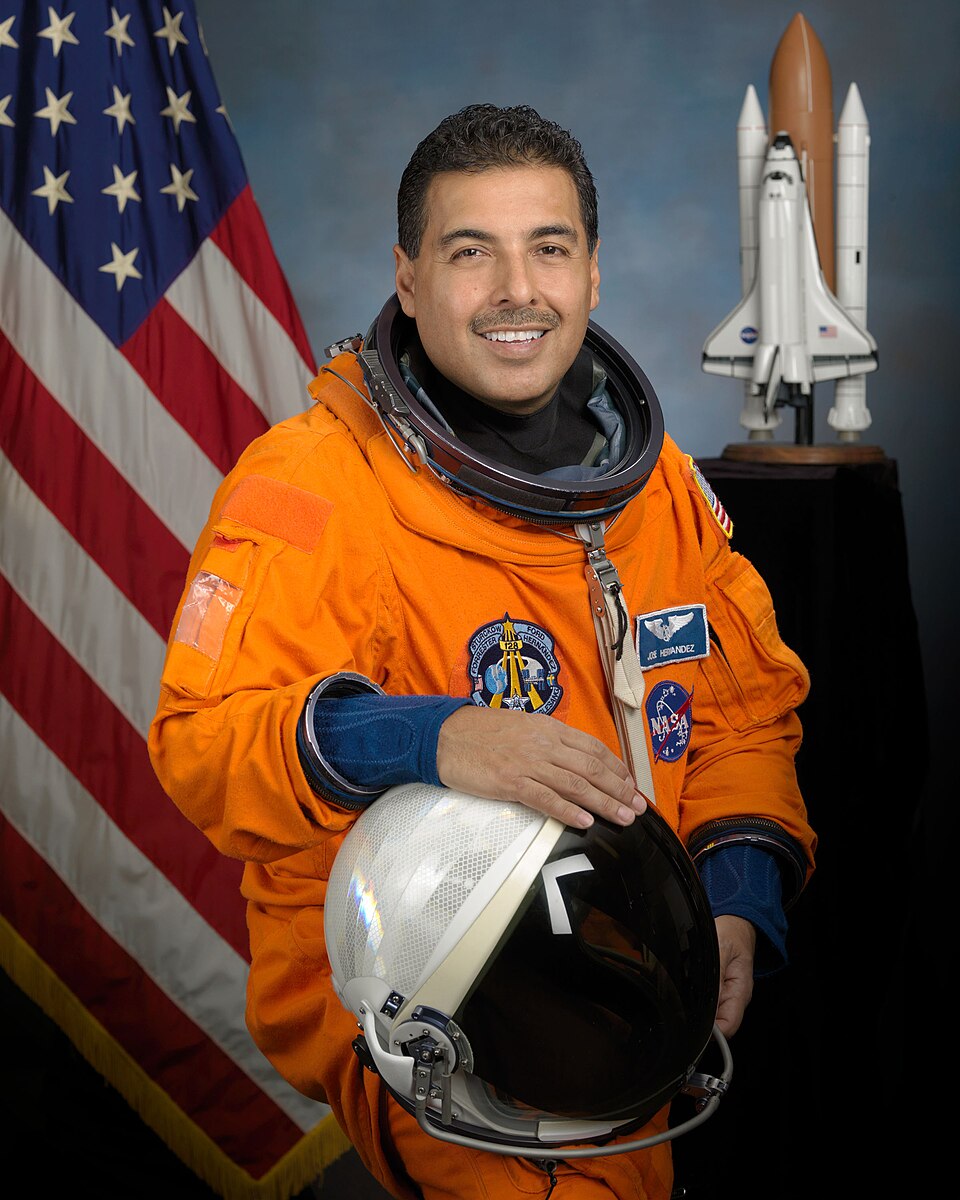
Born to migrant farm workers from Michoacán, José Hernández picked crops across California, learned English at twelve, and was rejected by NASA eleven times before flying to space on the twelfth. The story behind A Million Miles Away.
Transcript
Transcript kept in the language it was spoken.All right. Welcome to the corridor. I'm Angel Leon. my guest today. He was born to immigrant farm workers. he picked crops across California as a kid and learned English basically when he was eleven or twelve. he was rejected by NASA eleven times and on the twelfth he finally flew to space.
Jose Hernandez is an engineer author and basically the story behind a million miles away. Jose, it's an honor. Welcome to to the corridor.
Thank you, Angel. Yes, that movie A Million Miles Away is based on my life story and it's playing now on Prime Video, so you could actually see it now. But yeah, it it explains the whole process of how the dream was born all the way to getting selected and flying into space for NASA.
Amazing Jose. Yeah, definitely. I I had the the chance to to actually watch an amazing, amazing story and and one of the main reasons why, you know, I also wanted to see if I could get you here in the show. So I really appreciate you being here again. So take me take me into you know the very beginnings, right into those fields. you were a kid working the harvest with your family, right? You're moving constantly, paint the picture for me. So what did a day actually look like for you, right? For young Jose.
Yeah, I mean
Yeah, I mean my parents are from Michoacán, Mexico, and there's four of us in the family. And we were basically a migrant farmworking family, which means that we moved around during the harvest. We spent nine months in California, two months up by where you're at, Ontario Chino area, picking strawberries, and then two months to Salinas, more strawberries, sugar beets.
And and and then from there we went on to Stockton where we spent the bulk of our time five months. So a total of nine months were spent two, two and five. And there we picked everything from cucumbers, cherries, green tomatoes for market, peaches, pears, ended the harvest with grapes, and then we headed back to Mexico for three months and that process began all over again.
the following year. And so when you enter school you could imagine how disruptive it was that once you're getting settled into a school, your friends, you get plucked out and you go and put in a new classroom, new teacher, new friends, you get plucked out and and the third time it gets done the same way. And then you take three months worth of homework and in the in the kitchen of your abuelita, you're doing homework.
You know, you're doing you you're self teaching yourself. You're not even homeschooled 'cause my parents only had a third grade education. They couldn't help us. So you self schooled yourself for three months and that process repeated year after year.
Amazing. So so one thing I I can't necessarily like, you know, wrap my head around, right? as I'm learning more about your journey and your past. so nothing in the environment that you grew up, right, says that you could go to space and be an astronaut and be, you know, in the in the positions that you are today. So where did that audacity right come from? Who or what made you believe right you were allowed to to want something that big?
Well, I I think things started to change for the better when my second grade teacher at our last stop in Stockton, California, convinced my parents that we needed to stay in one place and we made Stockton our home. Three years later, you can imagine a ten year old kid holding on to rabbit ear antennas for dear life. And and that was me watching the very last Apollo mission, Apollo seventeen. And and and so there we were.
when I saw Gene Cernan basically walking on the moon live on TV cold December evening and then there I was. would go outside. I would go outside and then I would see the moon out in full glory, come back inside and and and and s hear and
see astronaut Gene Cernan talked to Mission Control Houston. So I was hooked at that point. At that point, I said that's what I want to be.
Okay. Right.
Amazing. So by by the time you're you're applying to NASA, you're you know you're up against people who had every advantage, right, that you maybe didn't, the schools, the money, the network, right? That head start. so how did you actually compete against that, right? What did you have to do maybe that the others didn't?
Well, I think what I had to do was was what was listen to my father's advice because when I told my father that same evening I saw Gene Cernan walking on the moon, Apollo seventeen, you know, I told him that you know, I wanted to be an astronaut. He sits me in the kitchen table and asks me why.
And he makes me justify and I tell him that the moon's a quarter million miles away. Repeat everything that that reporter Walter Frankheit said that night. Moon's a quarter million miles away. this was the last mission of the Apollo era, but that NASA was gonna build a new space vehicle, so I want to be part of that. And and he did two important things. He validated that dream and he gave me a five ingredient recipe. He said, He said, I think you can reach your goal.
your dream, he says, and I remind you, he only he and my mom only have a third grade education. And he said, first, determine your purpose in life. Second, recognize how far you are. Third, draw yourself a roadmap so you know how to get there. Fourth, prepare yourself according to the challenge. And fifth, that same work ethic you put out picking fruits and vegetables with your siblings, mom and dad, he pointed to my books on the kitchen table and said, You put it there.
So you mix that up, mijo, and that's the recipe to succeed. I you know, life taught me to add a sixth ingredient, which was perseverance, which is never giving up. And so that's what made me believe, that's what made me believe that I could become an astronaut, Ankel. you know, I that's that's what actually, you know, maybe ignorance is a bliss. I didn't realize how hard it was gonna be. I didn't realize how many rejections I was gonna get.
But but nonetheless I wanted to be an astronaut.
NASA said no eleven times. On the twelfth, I flew.
Yeah, no, and I I I was about to to to even say, you know, even then, right, there was eleven rejections, right? So most people quit after two, three. What what what were you doing between each no, right? To come back stronger. And w what did you tell yourself, right, on those nights that that that it felt impossible?
Well, I mean I I just kept encouraging myself and I kept improving upon myself. I would I would I would not take rejection as a as as a discouraging factor. I took rejection as information. Information that I use and said, Okay, maybe I'm not ready, maybe I need something else, maybe I need to
prepare myself in other things and so that's how I use the rejection. So I refused a rejection to be a final rejection. I just took it as a point of information.
Mm-hmm.
Definitely. So then once you finally write that final that final yes comes and everything sort of changes at that at that moment in time. So and now you're you're in space, looking back to Earth, and that moment you were out there, right? What went through your mind about when, you know, where you started, right? And and and everyone's still in those fields that where you grew up.
Well, I I think what went through my mind was I said, you know
How I got here was an amazing journey. It was a difficult journey, but not impossible, Angel. And so what I I did is I said, I'm I think I'm gonna write my self-pen biography to encourage kids, specifically people of kids of color, to reach for their own stars, to let them know that where you start.
does not define your destination. you yourself define that destination. The gap may be bigger from where you start from others, but it doesn't mean you can't reach that same endpoint that others want to reach. And so so I thought writing a book would be appropriate. Then I wrote a children's book, then I wrote a middle reader book, and then Hollywood came calling and we filmed
A million miles away. And so it went from me giving conferences to motivating hundreds and motivating thousands of people to then writing the books to motivating hundreds of thousands of people to the movie, which now I believe motivates millions of people. So I'm very happy at the fact that I'm able to get back via my story.
That's all.
Definitely. So and and and Jose, when you know, when you came to the US, right, and and and you you were working, you were young, what was that journey like in terms of you know how did you how did you become an astronaut, right? So what was your journey, your educational and experience, right, that you knew you had to get that may have been a little bit difficult for you know being Latino?
Right, and a different background that anyone, you know, anyone else didn't.
Yeah, I mean it was and a point of clarification. I was born in this country. you know, half of there's four of us in our family, two of us were born in the US, two in Mexico. It all depended, the month you were born in dictated what country you were born in. But even so, English was our second language and moving around basically
didn't allow for us to learn the English language properly at an early age, much less the material that was being teet taught by the teachers. And so, you know, two plus three is five in any language. And my refuge was math and science. And so when I saw astronaut Cernan walking on the moon on TV and said I want to be an astronaut, I quickly found out that you had to be a scientist, an engineer.
something in the technical field. And to me, I said, man, that fits me well because that's my strong suit, math and science. And so I quickly convinced that I was gonna be an astronaut. but I knew I had to finish high school. I knew I had to get good grades. I knew I had to go to college. I knew I had to go to graduate school because it was so competitive. And in doing so then I started working at a a renowned
Research Laboratory, Lawrence Livermore National Lab. And I worked there 17 years before being picked up by NASA. So everything sort of was methodical, carefully calculated, and and a lot of people say, Well, you got rejected eleven times, don't you get frustrated? Sure you get frustrated, sure you want to give up. But you know
Every time I got rejected, as I taught told you earlier, I treated as a piece of information. But then I also consoled myself. I said, what's the worst thing that can happen if I don't become an astronaut? I have a graduate degree and work in a great, well-respected national laboratory by the Department of Energy. get paid well. So it wasn't a bad consolation price. So that's why we have to enjoy the journey. I always tell people, enjoy the journey along your path to your destination.
Definitely. You you reached something, you know, that almost no one does. What what did that pursuit, right, and and that journey may have cost you along the way, right? And that basically the part of the stories were that isn't in the movie, right? Is there any specific challenges, right, that you remember that you had to go through?
What well yeah, I mean it's it to me it's family. It's sometimes you when you're training, when you're becoming a pilot, you're learning how to scuba dive, all these things where it takes you away from your family. And and so you've gotta you've gotta have a balanced life. you know, I was able to get selected as an astronaut. I flew into space, but when I returned, Angel,
They announced the retirement of the shuttle fleet. But they said, Don't worry, you know Russian, you've been to Russia. We're gonna we just signed an agreement to take our astronauts to space with a Russian Soyuz vehicle so you can go. And I said, Yeah, sign me up. They said, You're gonna be one of the first ones. I said, Great. But then I read the fine print on the training profile. It was a three year training profile where seventy percent of the time you're in Russia.
And and then once you go up, you go for six months, and then you come home, you go on the road for six months. Well, I have five kids. My youngest was fifteen, my oldest was fifteen, my youngest was six. And to me, that was too big of a price to pay. So I sort of drew the line there, and that's when I decided to leave NASA. So I guess the message here is yes, you do give up a lot to reach your goal.
But make sure you don't give up everything. In this case, I did not want to give up the crucial time my kids needed me while I was in Russia. I so I as much as I wanted to go back into space, I thought family was more important, so I did not cross that line.
Definitely. I I can, you know, relate to that. I was in the Navy myself a as well and I I did basically four tours in a matter of five years. and that was one of the you know heaviest things for me as well, just to be so long, you know, apart and and and missing so many different things. the last year that I was about to actually re enlist, my mother fell i sick and she she got pancreatic cancer. And
And those were the moment that moment was when I actually realized like, wow, I have sort of, you know, missed right all this time with my mother, all these years, right, that that I could have had with her. and and now I don't. and that last year, you know, was very eye opening for for me as well in that sense that, you know, I decided I'm gonna go back to Puerto Rico. I stay with my mother and then I
I didn't re enlist again. and I, you know, decided another path for my career. So I can, you know, definitely relate to to that. Especially I think us as Latinos, right, we're very family oriented and and families, everything, right? That that's our support and our backbone. So I can I can thoroughly understand that. and and Jose, again, thank you for you know being in the show today. I really, really appreciate it. I feel that, you know, your story has so much power.
not just f you know for everyone, right, of course, but specifically for the the goal of this show and it's the Latino audience, right? And and I feel that for us for Latinos it's very important to showcase stories like yours to to show that, you know, that si se puede, right? That that that there there is a path, there is a journey, there are doors, there are opportunities. and and it's a matter of, you know, like you said, right, following those rules that your dad told you and and and
Be determined. if any, you know, young Latino, Latina is watching this right now, right, and they're they're thinking about something big, right? They I know that's also very kind of hard in our culture to to talk about our parents about these big, big dreams.
Not all all not all parents are like your dad, I would say, in that in that sense that that are that supportive. I feel that there's a lot of cultural things, right? Where saying, for example, hey, I wanna be an entrepreneur or I wanna I wanna build my own company or this and that, those are kind of things that are sort of taboo because how are you gonna make money? You know, I wanna be a musician, right? That I remember that was another one. I I played the piano for a long time myself.
And and those things are never talked about too much, right? So if Latino Latina kid is watching this, you know wanting to to to to do something big, right? And and in and they're struggling, right? Just because they don't have this access, they don't have this network and these doors, what would you tell them? What would be the the you know one or two pieces of advice that they couldn't hear for anyone else?
Right specifically from someone that already did it.
Well, I I think I would give that five ingredient recipe that my father gave me and I would add perseverance as the sixth ingredient. sometimes we're our own worst enemies when we give up on ourselves. And and so resist the temptation. It's always easier to give up and pick an easier road than to keep going when you have a a a go that
you may perceive as being tough. But, you know, a lot of people always tell me, you know, you've been so lucky in life and you became an astronaut, you've done this. And my response to them is it's funny how the harder I work, the luckier I get. And that's what I would tell these kids. You gotta work hard to get lucky.
Definitely. Thank you, Jose. I really appreciate that. And tell us tell us a little bit before we leave, you know, your latest projects, right? And what's your your latest endeavor, your your what's your, you know, what are you late lately working on?
Yeah.
Well well I've written three books. I told you earlier. I'm working on my fourth book and it's tentative titles closing the gap and and it's a self help book. So it has the mechanics of the of the six ingredients I just told you and three other processes. So it's a total of nine processes that allow you to achieve your goal.
It's the mechanics of it. So I'm very excited about that. I came full circle, came back home. I have my own vineyard now. And I still pick I still pick grapes, still drive a tractor. Only difference it's my tractor and it's my grapes. And and then you always keep reinventing yourself. I did not stop there. I opened up you know, my engineering consulting firm, Aerospace Consulting. So I do that. And then I also make my own line of wines, Tierra Luna Cellars.
you go to Tierra Lunasellers.com. You can buy any of my books there and you can buy any of my wines there. We ship to almost every state in the in the country. So so look for that. And then finally, you know, I was believing giving back. We just celebrated my foundations reaching for the stars 20th anniversary. And and we also kicked off to note that.
milestone we kicked off a one million dollar endowment fund campaign. So we can raise one million dollars or we can give scholarships in perpetual form long after I'm gone to kids in the Central Valley that wanna get into STEM careers. So that's what I'm doing now, Leon.
Amazing. Amazing, Jose. Jose, thank you so much for for being here again and for continuing that work. Right. that as you say, you know, I think that as you as you get older and more experienced and all that, it it the work starts to be in a little different, right? And I feel that your journey, right, you you continue to do what you do in a different way. and I and I truly appreciate that. So thank you, Jose, again for being on the show. Thank you everyone. Thank you everyone.
Thank you. All right. Thank you very much. Adios. Bye bye. Bye bye.
Corridor Context
José M. Hernández is an engineer, author and former NASA astronaut who flew aboard Space Shuttle Discovery on STS-128. The son of migrant farm workers from Michoacán, he was rejected by NASA eleven times before being selected. His life story is the basis of the film A Million Miles Away.