

What ownership frees you to bet on
How a Latino immigrant went from junior partner to sole owner of his venture firm, why ownership changes who you are free to bet on, and what it costs to control your own capital.
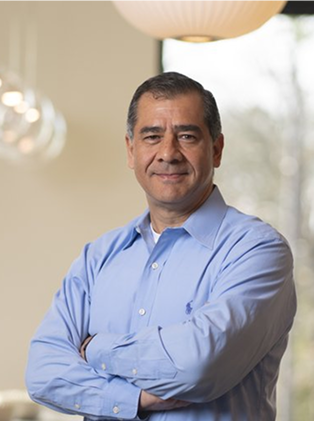
Transcript
Transcript kept in the language it was spoken.All right. So welcome to the corridor. My name is Angel Leon, your host, and today's guest is Lister Delgado. almost no one in Venture actually kind of owns right the firm they invest from. Most people spend their careers as one as one partner among other partners and several others investing someone else's conviction as much as their own, basically.
but Like I mentioned, my guest today he he did the right thing, the rare thing, sorry, Lister Delgado. he co-founded Idea Fund Partners back in two thousand six six, if I if I'm not mistaken, as a junior partner. And over the years he bought out all the other three partners, one by one until he basically owned the entire firm.
and today he's the the sole managing partner of basically what it is, one of the most active stair early stage funds in the southeast. and I wanted to talk to them specifically because of that, because that path going from junior partner to a sole owner opens up a a conversation our audience really gets to hear what it actually takes to own and control your own capital and how that ownership changes who you're free to bet on basically.
so listen welcome to the corridor.
Thank you. Much appreciated, Angel. Good to be here.
So yeah, of course. Thank thank you for your time and and and sharing your story with with the audience. And and I want I want you to take us back to to the beginning. You you started Idea fun as a junior partner in two thousand six and and over time, like I mentioned, you bought out all the three partners, almost no one does that. How how did they that even start, right? And how did you know at the beginning where it would end up?
Yeah, I think like most things that that sometimes are worth something meaningful with a lot of luck and some and some good and and a lot of resilience I guess. so i lucky, honestly, because I was at the right place at the right time. But at the same time I think perhaps the most important part is to not necessarily follow a prescribed path. sometimes you get lucky when you buy the lottery ticket.
You win the lottery when you buy it, you don't win it if you don't buy a ticket. So surprise, surprise. I never buy a lottery ticket, but when it comes to work, I had aspirations to become an entrepreneur. And then when I went to business school, I learned about venture capital. And then I really wanted to become a venture capitalist. I think the more traditional path for me would have been move to Silicon Valley.
and I I moved to North Carolina, not the Mecca of venture capital, I have to admit, on entrepreneurship. But when you think about it, it's a very interesting place with a lot of technology, a lot of innovation, a lot of underserved founders, some Latino, some minorities, some not.
places.
And and that created, I think, for an opportunity. Not a whole lot of managers, whether they were emerging managers or not. So maybe if there is a part of a story here is following your own path. And I did it in in my case because I wanted to make sure that I had a decent balance between work and life. My wife matched in North Carolina as a physician to do a residency here in North Carolina, and I wanted to be the best VC.
that I could be, without compromising certain things about la family and and where I lived.
So what what made owning it right at at the end and like what started that, right? Like what made owning it outright matter like enough, right, to actually do it? and what did you feel you couldn't do as one partner among several, right, that you feel that you can do now?
Yeah, I mean honestly at the beginning I don't think I thought about it much. I I wanted to join a firm and any firm that I could get into, and I came into venture right after the internet bubble burst, which is so d this is the interesting thing. Sometimes you think that you wanna be part of something as it's growing because that's the obvious place. Sometimes the obvious time to do something is when nobody wants to do it.
and that's what was happening right in the early 2000s. venture capital was disappearing. I graduated from business school. Nobody wanted to do anything with entrepreneurship at venture capital because it was very risky. But what it did in my case, as a Latino immigrant, it took away my competition.
I'll tell you, when I was in business school, I couldn't get an internship with any farm f firms outside of North Carolina or in North Carolina, even though I was the president of the venture capital club.
I I'm not saying it's because of my accent. I'm I'm just I think there was just not that many opportunities. But when the internet bubble burst, all the competition went away. All my competition went away. So that for but I didn't change my path. So I was able to find a an opportunity in a firm that was being created. And and that's what that was the predecessor to Ideaf Fund Partners. And again, like I said.
Initially I wasn't thinking about owning it, I was just thinking about being a part of it. and then sticking around with it and then learning about the firm and venture in general and then growing with it gave me the opportunity to say, Yeah, I mean my partners are leaving one at a time over a long period of time. I'm talking about over a twenty year period.
Then I kept buying and buying into it because I felt myself being more and more a part of it and more wanting to do more and more. And that's where I am now.
So this this process, you know, I'm I'm I'm sure it it's hard financially, personally, right? and especially also because, you know, like you say, you spend so much time with these partners that are basically people you've built things with, right? so you you have those personal connections as well and those relationships. so it plays a lot right into into your decision making, I would say.
So what what What did that actually cost you, not monetarily, just in in in terms of you know your personal right? as a person, what that cost you and what did it teach you about you know you being a VC?
Yeah. Well, it did cost me monetarily. I have to buy into it. In this case, I had to get into debt buy basically an opportunity to invest in myself. and that is not unusual in venture. I mean that that that can't that does happen. and but it did cost me more. I mean, and what I would say it cost me is
Is the same price that probably any founder feels they're spending in the in choosing to build something new versus working at a large established business? Same thing. That trade-off about are you an entrepreneur? Do you want to build something? How important is it? How meaningful is it? Are you going to give up salary? Are you going to give up you know size, reputation, maybe initially? To be able to build something that is your own.
And so that the costs were the same. You know, I think also, like I said, I could have eventually moved to another firm somewhere else, just be an employee. Probably would have been a much more frustrated VC. Although being a partner comes with a whole lot of frustrations as well. But, you know, again, I I I would say I would put it equate it to what an entrepreneur feels.
in the same trade offs and the same any entrepreneur will recognize that.
So now now that this is all, you know, yours, right, how does that change what you what you're able to to invest in, right? And and and what can you invest in today, for example, that maybe previously your committee or co-partners might have talked to out of it?
Sometimes the obvious time to do something is when nobody wants to do it.
Yeah. Yeah, that that is the biggest benefit. and you know, there's actually some research. So there's a couple of things. One is being a partner and and being a partner in your firm and growing it with it and then becoming an owner in the firm as part of a group. There's a different aspect of it, which is being a solo GP. It's interesting because there are firms of investors, fund of funds or LPs.
will not invest in solo GPs. and others that have investing in solo GPs as a thesis. Investing in solo GP is quite interesting. I think it comes with a whole set of risks. because just like what a single founder, you have nobody else really to talk to. you have to depend on yourself for a lot of the things. It's a lot of responsibility. But also you can be a benevolent dictator. in a way. It and and it can also ach allow you to achieve more.
So in my case, it enabled me to remove some of the frustrations that I had as a fa as a as a partner. the more the fewer partners we had, the the more I could I could more influence I could have. And that can work well if you have a good plan, but it could also it so comes with a bunch of challenges. The biggest one for me
Again, being a North Carolina based investor, and and being a Latino immigrant is the realization of what I was learning and I was seeing that was very personal and the kind of investing that I wanted to do that was personal. And and and it enabled me to realize I can invest, I can have thesis that are completely different than what I might have been able to do with my other partners. I could invest in underrepresented founders.
I could invest in underrepresented regions. One of the things that I think I was able to do and focus on is when you think about a lot of the problems that entrepreneurs of color have and women, when it comes to access to capital, a lot of it is not necessarily discrimination or at least upfront discrimination, but it's systemic bias.
Is is the fact that We set up rules and structures to make it difficult, not intentionally, but to make our lives easier. For example, our partners and I used to say, you know, we will let's not talk to anybody, any any founder that comes in cold. Let's just only talk to founders that come refer by somebody that we know.
And it kind of makes sense because when we're talking to so many founders, when we get so many inbound requests, it's very difficult to manage. But when you're
have a deal refer, then there's a filter that allows you to say, okay, this one might be better. The challenge is when you are a VC in North Carolina, and as you are in many other places, and you look at our LinkedIn networks, mostly are old, male, white, that is going to create, and then you're asking those people to be the only ones who can refer deals to you. That is going to create a bias. So your network makes a difference.
Right. .
even somebody like me, who was Latino immigrant with an accent and all that. So I realized that and I changed that from an inbound model where I'm receiving deals from people coming into me to an outbound model where now the onus is on me, not on the founder. And you know, when you look at the percentages, black Latino female founders are are, you know, are succeeding at the same rate as as white males.
But they only get two percent of the capital typically, each of those groups. So to me, the this wasn't just an issue of equity. It was an issue of opportunity. There's gotta be some gold out there that is being left ignore just because the system is not set up right. So that's where I base my thesis on. I think that would have been more difficult to do with my partners. Not impossible necessarily, but it would have been more difficult.
And I was able to do it just because I wanted to. I lost some LPs along the way because of it, but I gained some others that that understood and liked the thesis. That's an example of what you can do when you are able to to you know, do what you believe in and set your thesis, which is based on personal experiences. I think that's important.
. Yeah, and then you know, to your point there, I agree with that it's something so personal sometimes, right? And it's very similar to to be a founder of a startup that you know makes X and Y products because you know they went through that and they suffer that for many years or whatever, and you create that personal connection with it.
and and to that point, you know, solo GPs that that hold that sort of you know history that are linked as very directly with the problem they're trying to solve with that fund. you know, I I feel that they they can definitely be a lot better, right? just like again, a startup that a founder that creates a product that they're linked, that they know, you know, from start to finish, right?
it doesn't matter the background where they come from, they know the product. Right. They know the the audience, they know the market, they know exactly how to distribute that and make it make it work, right? And and that's more valuable than you know anything else really. so I I I definitely you know agree with that and and a lot of our audience you know it's it's building, right?
whether they're founders or they're emerging VCs or or they want to be, you know, in in the VC. space. and they're building places and communities, right, where v basically like you mentioned, right, traditional venture overlook.
So you spent your career backing these early stage founders in the southeast, not Silicon Valley, and and you've been very vocal about the the funding disparities, right, in the Latino and underrepresented founders as well, not just the Latinos. and so when you when you fully own
your conviction does does that free you right to to see value where the rest of the industry isn't looking?
Yeah, yeah. but it does come with challenges because it's not a thesis that everybody believes in. but it does allow me to, like you say, follow my conviction, follow my experience, follow what I know escape is possible. And again, I think when you explain the thesis to someone else, regardless of their background, they get it.
Like yeah, it's to me it's pure math. And and I don't it's not a matter of what s whether somebody can understand does it he can understand sort of equity or inclusion or you know, or whether it's fair or not. It's math. Right. So I think from that perspective, but it but it you need to live the experience, you need to understand it in order to be able to to make sure that your thesis is meaningful and makes sense. That's where it comes from, I think.
Right. . . And and with the I I'm just curious, you know, in in that area that that you focus on right in the southeast, what are the top you know industries right now that are blooming, you feel, right in in that area, compared to maybe, you know, the northeast or even the the west coast?
You know, actually the Southeast is a very diverse region. You have a lot of a lot of cybersecurity, you have a lot of defense technology, a lot of dual use technology in the in the Washington, DC metro area. you have some life science in Virginia, in North Carolina. you have you know a lot of services, a lot of
large companies in the Atlanta area. There's there's a lot of banking in Charlotte. There's a lot of banking in Atlanta as well, financial services. There's a lot of software in the entire region. and I think our region is very much very similar to the the global or the n or the or the or the or the national sort of region. That you know there's there is quite a bit of everything. And we're seeing the transformation that AI is have is having.
We're also seeing the transformation that some of the medical technologies are have are having. Things like CRISPR, for example. you know, we have companies that are working in quantum computing here, chip cooling, AI design, a lot of hardware, but also a lot of software. We are very rich and diverse region. That's one of the things that I had to do, I had to focus on because I was.
I was primarily focused on investing geographically now. I had to open up the aperture of the kinds of investment that I was milling willing to make, from consumer focus to hardware to software, rather than saying this is a a a a focus area. Because we're very rich and very diverse. And and I think it's very representative of the what is happening. But the challenges that we're seeing are very similar to the challenges that we're seeing everywhere.
AI is is really transforming what we invest in and trying to figure out what's the next chapter, what is the next technology, what is the what are the next variables to bet on.
Interesting. And are you seeing a lot of, you know, of course AI companies being formed, but a lot of AI that's being applied to areas where maybe five years, ten years ago, you were never seeing, you know, these kind of deals coming in?
Yeah. I mean I've been investing in AI. I'm a electrical engineer by training. I mean I was studying AI when I was in grad school in nineteen ninety-nine. sorry, nineteen ninety-five. and we made investments in AI, which was really machine learning, fifteen years ago. and and so obviously back then AI was very different and and and it wasn't
Wow. Okay.
as omnipresent and it wasn't as applicable. And then what happened is we ended up building large language models. But before then, before ChatGPT and Claude and Perplexity, all these companies emerge, we were already making investments in AI in certain region in certain areas. What has been happening lately is definitely the the next evolution, which is the the application starting to come up, just like what happened with the internet, sort of enabling
different applications, you know, software applications really to start to be built. We're starting to see now the the applicability of of particular problems. You know, and and in in one sense everything is being disrupted, but in another sense, it's exactly the same cycle that we've seen before, right? It's just an evolution. What happens is initially you have the the infrastructure and then next comes the applications.
And that's what we're seeing today. But what is what is really different from 10 or 15 years ago is this peed at which companies are changing, technologies are being built, and and that makes products not be the thing that we can really bet on so easily. We used to bet ten, fifteen years ago, a good product was enough to be a differentiation, and that was good enough to bet on. Today, a good product.
Not good enough to bet on. There's gotta be more. because we know that the next product that is gonna replace that first product is gonna change so fast, the competition's gonna come in so quickly, that we need to bet on something else if we wanna be sustainable.
Interesting. Thank you for sharing that, Lister. And thank you for, you know, again to take the time to tell your story, amazing journey, you know, like I mentioned to you before we started recording this, right? it's a story that a lot of Latinos don't get to hear, don't get to have, for that matter. and and it's just, you know, something I feel that people need to know, right?
And people need to understand that there's different paths, different journeys. To accomplish whatever it is that you want, right? whether you're a founder or a VC, it doesn't matter. it's basically all, you know, all of the same at that point. so for just one last question for you, Lister. for for the founder or emergent VC that's listening to this, right? And they they want a little bit more control over their own path, right?
whether that's owning their firm or or or that's you know, being a s a solo founder for a while at the early stages as a founder, right? what's the one thing you tell them, you know, as a piece of advice?
Yeah. Yeah. Usually and I've been asked this question before. I I think and my my my answer starting, you know, it's changed over time and it evolves as it makes sense. But I've asked enough times now that I think I've arrived at a more more like a not one but three things that I think of. One is I think it's important to understand what's important to you. define your finish line.
Like We think about the path, but sometimes I think it's important to first define what's the finish line. What do you want to accomplish? And it it's a difficult thing to be able to do when you're young, when you're not you don't have enough maturity, when you still need to grow. so it's not something even your finish line may change, but it is important to have one. because I think that is what really takes is what is gonna define where you go.
And if you don't have a finish line, even if it changes over time, then it's very difficult to to get somewhere. I think the other thing is that there's not one path to get to that finish line. So so when you look at me and my path, hey, that might be a path that others can take, but it might be impossible for for someone else. So just not trying to follow somebody's footsteps necessarily, but try to make your own path sometimes.
it's okay to follow an example, but You know, be bold and brave to to to to create a path. And then lastly to stay resilient, to to keep walking, right? Keep moving towards that path. Because you know, if it's not worth if if if if it's not hard, it's not gonna be worth doing.
so I think resiliency is really what drives us all as entrepreneurs, as founders, as builders, and it's important to keep it and to have it and stay res stay stays resilient.
Definitely.
I love that Lister. And I'm I'm sure, you know, I I love that mindset and and I'm sure that's why you are where you are today and that's why you you know you've built the career that you've built for these many years and and and I really again appreciate what you've done. not only before but now and will do.
and everything that, you know, that you've helped basically as well with with the tech community, the startup community in the South East, and And of course as a Latino, you know, it's always refreshing and very nice to hear other Latino stories. that's something that, you know, I'm I'm personally passionate about. So again, I really appreciate you being in the show and thank you, you know, thank you again for being here.
Thank you. Thank you for the invitation, Angel. Great job of what you do.
Thank you, Lister. Appreciate it. And to everyone listening, this was the Corridor. And my name is Angel Leon, your host. And today's guest was Lister Delgado, co or our managing partner now, full mind managing partner, right? Of Idea Fund Partners, investing in early stage in the South East. Thank you, everyone.
Thanks.
Corridor Context
Lister Delgado is the sole managing partner of Idea Fund Partners, one of the most active early-stage venture funds in the Southeast. He co-founded the firm in 2006 as a junior partner and, over nearly two decades, bought out each of his partners until he owned the firm outright. A Latino immigrant and electrical engineer by training, he has built his investing practice around underrepresented founders and regions, moving from an inbound referral model to an outbound sourcing model to remove systemic bias from his deal flow.