
No doesn't always mean no forever
How a two-time founder built a fifty million dollar hybrid fund in Chicago that writes first checks into pre-seed startups and anchors the emerging managers who fund them next, and why philanthropic capital belongs in venture, not in charity.
Transcript
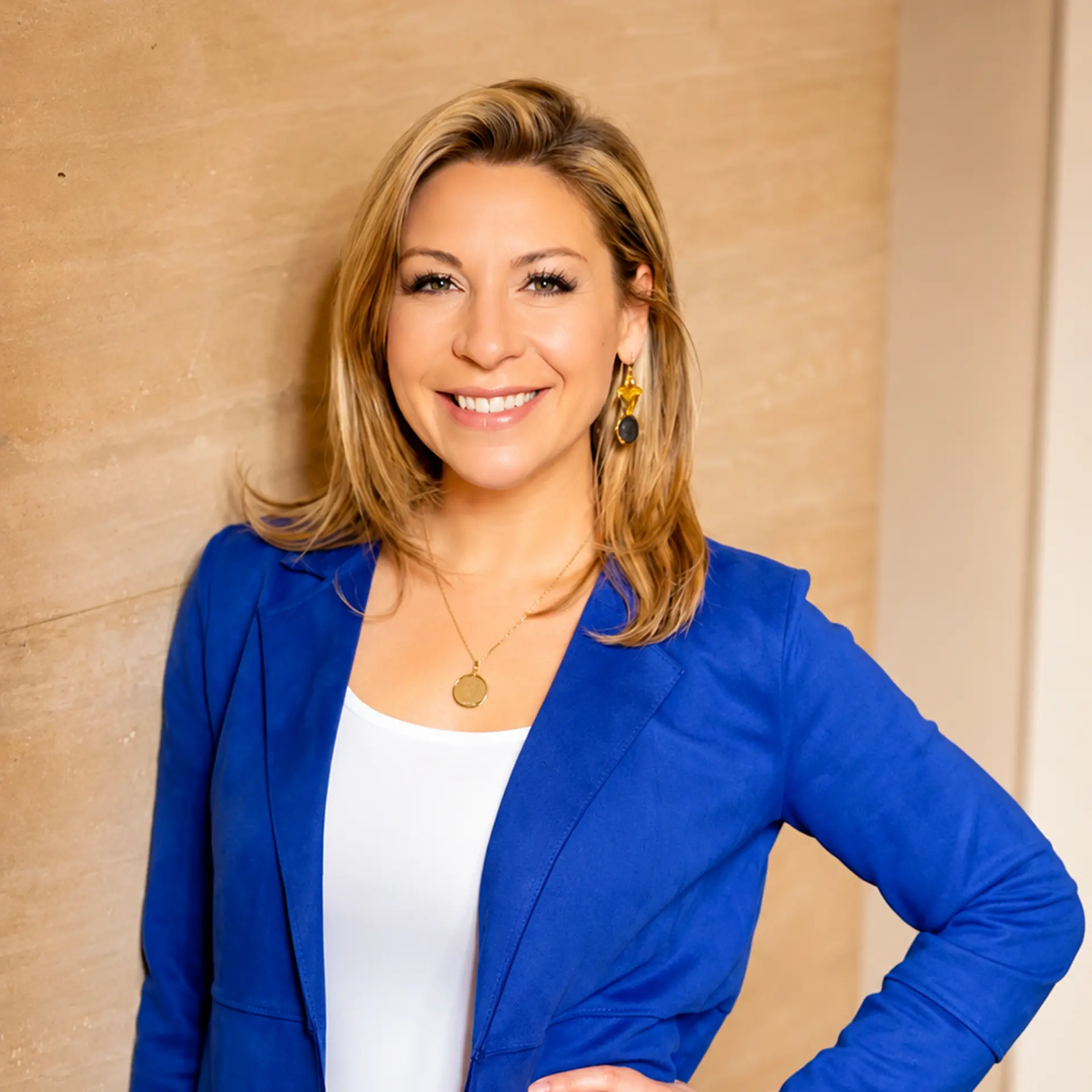
Transcript kept in the language it was spoken.Alright, welcome to the corridor. My name is Angel Leon, your host, and most investors, they sort of pick a lane. My guest today, she built a fund that runs basically two at once. Desiree Vargas Wrigley, she is the founding general partner at Velocity Catalyst, which is a fifty million dollar hybrid fund in Chicago that does something a little unusual.
It invests directly into pre-seed startups and it anchors the emerging fund managers building around them. So it's a 25 million pre-seed fund and a 25 million fund of funds designed to basically rebuild an entire regional capital stack from the ground up.
Before she wrote any checks though, she was also a founder. She built and ran GiveForward and Parachute. She was also the co-founder of the women-led angel group, the Josephine Collective, and a Latina who has spent her career basically making sure capital reaches the founders and managers the markets overlook. Not as charity, but as a return strategy, which is the important thing. So Desiree, welcome to the corridor.
Thanks for having me, Angel.
So you spent years as a founder as well, like I mentioned, GiveForward and Parachute, before you ever became an investor. Take me to that moment when you decided to cross over from building companies to funding them. What did being a founder teach you that you couldn't have learned any other way as an investor?
I was lucky enough to go to Yale for undergrad and all of my friends were either going into medicine or law or investment banking or consulting. And none of those things were exciting to me. Especially investment banking. I was like, I don't want to just make rich people richer. So investing was always almost like a dangerous or no-go zone for me.
And especially as a founder in those early days when you're trying so hard to get venture dollars and you just keep getting no after no, and you look at these venture investors as the evil other side of the platform. You don't really have a lot of empathy for them because you think they're just rich guys making decisions about your future and the future of your company.
But one of the great things about not having an easy road of building startups is that you start to get to know these investors over not just a raise, but multiple raises. And one of the things I think founders don't realize is that when they're fundraising, that no doesn't always mean no forever. It means no on this round, on this company, at this time.
GiveForward would be built up to a certain place before GoFundMe ended up buying it. But Parachute, my second company, I got to go back to a lot of the same investors and see how they'd grown their firms and how they'd grown their perspective and how they thought about collaboration at the pre-seed and seed level. So I started to learn over time that venture is not this thing of the haves and the have nots, the founders being the have nots and then the VCs.
I also started to learn more about the funding cycles and how much they also have to raise. And it gets easier over time, just like being a founder. But we share a lot of challenges. The big difference being that founders are building something that doesn't exist yet in the world, usually, and VCs are building something that absolutely exists, but we both have a ton of competition. So I started to have more empathy with investors over time.
And then honestly, it was my time building TechRise at P33, where we were supporting Black, Latino and women founders, and I started to see all these incredible companies coming through. And I realized that I had personally no diversification. I was just invested in my own startups. Maybe being an angel investor would make sense. But candidly, I just didn't have enough money to put 10 to 25k checks to work in a short period of time to get the portfolio distribution you need for power law to work. So I joined forces with my friend Amy Rosenow to build the Josephine Collective.
That was kind of a first step into venture for me. And now we're at 63 investments with a 97% survival rate. So I feel quite proud of that. But it wasn't an aha moment, like I have to build a venture fund. I thought maybe I would actually get recruited into a venture fund. And then, like any founder, I recognized an opportunity.
And Velocity Catalyst is sort of, like I mentioned, a little unusual, because most funds either invest directly into startups or invest in other funds. You do both, a pre-seed direct fund and a fund of funds anchoring the emerging managers. So walk me through the why. What does running both sides let you do that a single strategy fund can't?
The whole time I was building startups, I've always been kind of a student of venture models. And there are these big mega funds, Sequoia and Andreessen, that we just don't have in the Midwest. So I started to ask myself, what would it look like to reverse engineer a Sequoia? If you look at the early days of Sequoia, they were mostly growth stage. They did later stage investments, less risky, and occasionally invested in early stage fund managers to get preemptive access and better deal flow and better valuations.
So I asked myself, what would it look like if we actually inverted that model? What if we started out where I have advantage, which is 20 years of building in Chicago and being a mentor at all the local incubators, having connections to all the universities? What if we wrote checks at pre-seed where we have this regional structural advantage? And then we embed the follow-on capital for these startups by investing in the seed stage managers who are building industry-focused funds who are likely to be the follow-on capital. If we can increase graduation rates, theoretically we can increase the growth trajectory of these startups and make them more competitive and increase valuations.
So really it was about returns. How can we take a very risky asset class, which is pre-seed, and de-risk it by making introductions to the next stage of capital. And alongside that I realized that there are several pre-seed funds out there taking a million of a 1.5 million dollar round. Not that it's sharp elbows, it's great to have that round done quickly for founders. But at pre-seed, founders need to right size their rounds and then they need to do that again at seed.
And if you have more collaborators at the table at pre-seed, the paths to introductions, the kind of people who are going to bat for those founders, just increases. It's more of a collaborative game than it is later stage when you need ownership targets and you have to put certain size checks in. So it just fits better with the way that I like to look at deals, the way that I like to collaborate, and the way I like to bring other investors in alongside us.
No doesn't always mean no forever. It means no on this round, on this company, at this time.
And you focus in Chicago, but the broader Illinois as well. Going back to the emerging managers, you basically are funding those emerging managers in the state's critical industries. So why are you betting on these emerging managers specifically? What do small focused funds do that big generalists maybe can't?
Another student of venture answer. I looked at Sandana, I looked at Industry Ventures, I looked at other fund of funds, and listened to so many podcasts, and just over and over again the narrative was sub hundred million dollar funds with an industry focus or some kind of edge had outperformed. We are in this interesting place in venture now where there are so many funds being formed. Lots of solo GPs or two GPs, and many of them are coming from industry with deep network density and often personal domain expertise.
So if you're thinking about writing checks into biotech or life sciences, which is one of the industries where the Midwest has regional structural advantage, or healthcare or quantum adjacent or advanced manufacturing, those relationships, those 20 years of operator experience, really matter.
And people think of Chicago as this city that's not quite as big as New York or Houston or LA. But the truth is we're the third largest GDP. We have one of the most diversified economies in the world. We are the capital of the Midwest. Most students coming from Michigan, Wisconsin, Purdue, Notre Dame, and of course the University of Chicago, Northwestern, U of I, they go to Chicago after graduation. And a lot of them are looking to build something bigger than themselves. So it's actually a really ripe space.
Most of the ones in software have left for the coast. But generalist software funds right now are less popular. If you think about competitive advantage, where can we win deals, where can we find talent, and where can we get great pricing? It's in industries that traditional venture has ignored and is only starting to pay attention to. And we're just getting into them earlier.
So when these emerging managers come to you for an anchor check, what actually makes you say yes? Is it that they have to prove that they have deals nobody else does? Is it that they have access to diverse founders, or that they can actually return proper returns? What is it for you that moves the needle?
I aspire to be an anchor check. We're still raising, so I want to be honest that we've only anchored one prototype fund so far. But we've participated in six now. And the checks are not as big as I want them to be yet because we haven't raised the whole fund. But that is the goal eventually, and to grow with these firms so that we can continue to be a meaningful catalyst for their first close, which is one of the biggest challenges that most emerging managers face.
What I'm looking for is people who have experience in the industry and also experience check writing. The first time check writer is much harder than someone who's been either in private equity or a later stage firm or has a meaningful angel portfolio themselves. Part of that is just the reps. You're looking at enough deals to be able to distinguish and say yes or say no. That's one.
The other is that in a lot of venture it's so easy to just wait for great deals to come into your inbox and do the sharing of deals with your network and the party rounds that exist all over. But the people who really go out and hunt and find those diamonds in the rough, that's what I'm looking for. People who are seeing things that others aren't.
I also am a power law investor in our pre-seed fund and I want power law investors in the fund of funds. This move towards venture that's really PE masquerading as venture is good for certain businesses, and there are absolutely businesses that just aren't going to have that multi billion dollar outcome, and we need a kind of capital for that. But as a fund of funds investor, I'm looking for people who are really taking moonshots and distributing that risk across multiple investments, where each one of those deals can truly return the fund.
And I read something online that you mentioned about someone telling you at some point to stop treating founders of color like charity cases by giving them nonprofit dollars. And you clearly took it to heart, and Velocity is basically built as a returns vehicle, not necessarily a diversity program or some sort of philanthropic investment. Why is that distinction so important to you, and why does the charity framing actually hurt the founders it claims to help?
I don't actually agree with that point of view, to be honest. When he said that to me, I thought that he undervalued the fact that most white male rich founders get a donation from a rich uncle or a grandparent or a parent. And that could be in the form of a free place to live and lots of introductions. It can be in the form of actual capital going into the company that never has to be repaid.
The idea that philanthropic capital can be used to catalyze businesses and to give people that first vote of confidence and give them a little bit of runway to go build something, I think is absolutely a great use of philanthropic capital. And we have so many foundations that are now starting to look at this opportunity and see the same thing. So the guy who said that, I think, was short-sighted and privileged and doesn't understand that philanthropic capital is also mostly sitting there growing, not getting deployed.
Between donor advised funds, foundation endowments, family foundations, those dollars are sitting there. They're going into real estate, they're going into private markets, they're going into bonds. Most of them are not touching venture. And venture stimulates economy, creates new jobs, and it creates opportunity. So I actually think the opposite is true. I think that we should be putting more philanthropic capital into high-risk venture and into funds, which is why I have a donor advised fund that sits at Impact Assets that can receive philanthropic capital.
It's intended for that philanthropic capital to grow. It's not a donation. But I absolutely believe it's a multi-hundred billion dollar a year asset that is sitting underutilized to create economic prosperity. And within populations where it's harder to find in-network sources of capital, it's the most important that it gets used there. So women, people of color, immigrants, all I think should try to find access to these donor advised funds.
And as someone that has built both a fund and a startup, what's genuinely the same, and what has surprised you about how different raising a fund is versus raising for a startup?
Great question. Both have pros and cons. The hard thing about a startup is that you have a dead date. You run out of money and it's either over or it's not. So it creates this pressure to get the round done in a certain amount of time, and you have to prove the metrics by then and you have to maintain market dominance or acceleration. There's a lot of pressure on a founder at one moment to raise the capital that they need, especially if they've been undercapitalized historically or it's the first time raising.
But the benefit the founders have is that they have this narrative and storytelling. They get to talk about a future state of the world where they're solving this big problem, and they get to have investors fall in love with their version of that future. As a venture investor, we're kind of peddling the same product as 4,000 other people. Venture is pretty much the same fee structure, and everyone says that their sourcing advantage is how they're going to pick the best deals.
So what it ends up being is more network driven as a fund manager, and reputation based, and the ability to follow through. People have to feel compelled to actually trust you with this capital that they're in charge of, either for their family or for their retirement or for their family office. I do think the hurdle to get in as a first time manager is so much harder actually than as a first time founder, where there are plenty of venture funds out there that'll meet with you and you can source and send the right email and you can find warm intros with a bit of work.
The fundraising on the fund side is so difficult because the family offices are kind of hidden and they don't want to be reached out to and they're asked for money all the time. So you really have to figure out what's your differentiation and why should people believe that you're the right person to be a steward of their capital. That's a pretty hard lift on a fund one when you don't have any performance metrics. Fortunately we have a ten X in our first investment and we have four more markups. So we're in a better position than we were as a cold start a year ago.
Walk us through a little bit about the thesis. How do you invest? What is it that you're looking for in your founders, and do you focus on specific industries nowadays?
I spend ninety percent of my time on the pre-seed fund. And we say we invest in industries where we have regional structural advantage from the Midwest or from Chicago. I use from loosely, because we are investing from Chicago with Chicago resources, and we do try to invest the majority of those first pre-seed checks into founders who are coming out of our top universities or spinning out of our labs or spinning out of other startups, of which there's a wealth of talent.
The industries where we have advantage are ones where we have either raw materials, distribution, manufacturing, contract partners, or natural acquirers. And there are industries that have some of all of those, like CPG and food. Between the farms that we have, the manufacturing, the distribution, the consumer testing, and then the big companies like Heinz and Kraft and Mondelez and Pepsi and McDonald's.
Historically I have said that we avoid fintech, SaaS and food delivery, because those are areas where Chicago's already had a lot of investment from local VCs or where there's a lot of national capital. I've been saying that since 2024 when I was first conceiving this fund, and now the SaaS-pocalypse is making it a more popular narrative. So I feel well-timed, which maybe is taking some of my founder energy of being a little ahead of our time sometimes.
But that's only 40% of the fund actually. Sixty percent we hold in reserves to do two things. We follow on to our best performers as they continue to grow and we have more confidence. But the other thing we do is we reserve capital to invest alongside the fund managers that we back out of the fund of funds in national deals. For example, we just got into a company called Peltier, it's in the cold chain, and our portfolio fund Supply Change Capital was leading that. We were the smallest check in that seed round.
And we would have never had access to this Bay Area hardware and software company if not for the relationship we have with our fund managers. So we really think of us as a first check Chicago focused fund, Illinois based, and then the other checks we have more flexibility to come in, because we can't control if the startups leave the city. But we do know if we fish in a ripe pool of founders who have a ton of potential coming out of these top programs, that we're going to have competitive advantage and access early, and then hopefully longer visibility to double or triple down along the way.
Thank you so much, Desiree, for taking the time today. I love your journey. I love what you guys are doing. Very interesting model and a creative way to help keep helping the early stage for Latinos as well, and our underrepresented founders. And just one last question that I usually ask. For any underrepresented founder or emerging manager out there building without that network that a lot of people take for granted, what's the one thing you tell them about proving they belong in that room? And also tell them where to follow you and Velocity.
I think for both founders and fund managers, don't underestimate the power of accredited investors in your fund or in your startup. You want the name brand fund or the institutional investor, but Fuse Capital showed us out of Seattle that they raised their first hundred million dollar fund with something like three hundred LPs from senior leaders across Seattle software companies. And I'm trying to do the same thing for Chicago. And while it is more work, the relationships that you build in all of those pitches that are local strengthen your overall network effect as an individual. That's true as you're raising angel funds too.
So get those introductions, spend a lot of time on LinkedIn, participate in conversations, show up in rooms where you don't feel like you belong, and bring value and do follow-ups and offer your network or expertise when you can. It's giving and receiving that's really important.
There's a tendency for us to stick with our communities because that's who we know and we know who the leaders are. And it's really important that we break out. It's sometimes helpful to be the only in the room. Being the only or one of the only women founders early on, and now one of the few women emerging managers and definitely one of the few Latinas, we're more memorable and we can really impress people because we stand out. So know your power when you're in those rooms.
And for following me, I'm on LinkedIn, Desiree Vargas Wrigley. I'm pretty responsive to people. And I do open office hours across the country, so you don't have to be an Illinois founder or emerging manager for that time.
Awesome. Well, thank you so much, Desiree, again for taking the time and telling your story. Again, everyone listening to this, general partner of Velocity Catalyst, Desiree Vargas Wrigley was my guest today. Thank you so much for being on the show.
Corridor Context
Desiree Vargas Wrigley is the founding general partner of Velocity Catalyst, a fifty million dollar hybrid fund in Chicago split between a pre-seed direct fund and a fund of funds that backs emerging managers in industries where the Midwest holds structural advantage. She previously founded GiveForward, acquired by GoFundMe, and Parachute, built TechRise at P33, and co-founded the women-led Josephine Collective, now at 63 investments with a 97% survival rate.