

She was a farmer first
How seven years farming tomatoes and limes in Querétaro led to an MIT MBA and an AI platform rebuilding agricultural credit, cutting loan decisions from ninety days to near real time for the people who grow our food.
Transcript
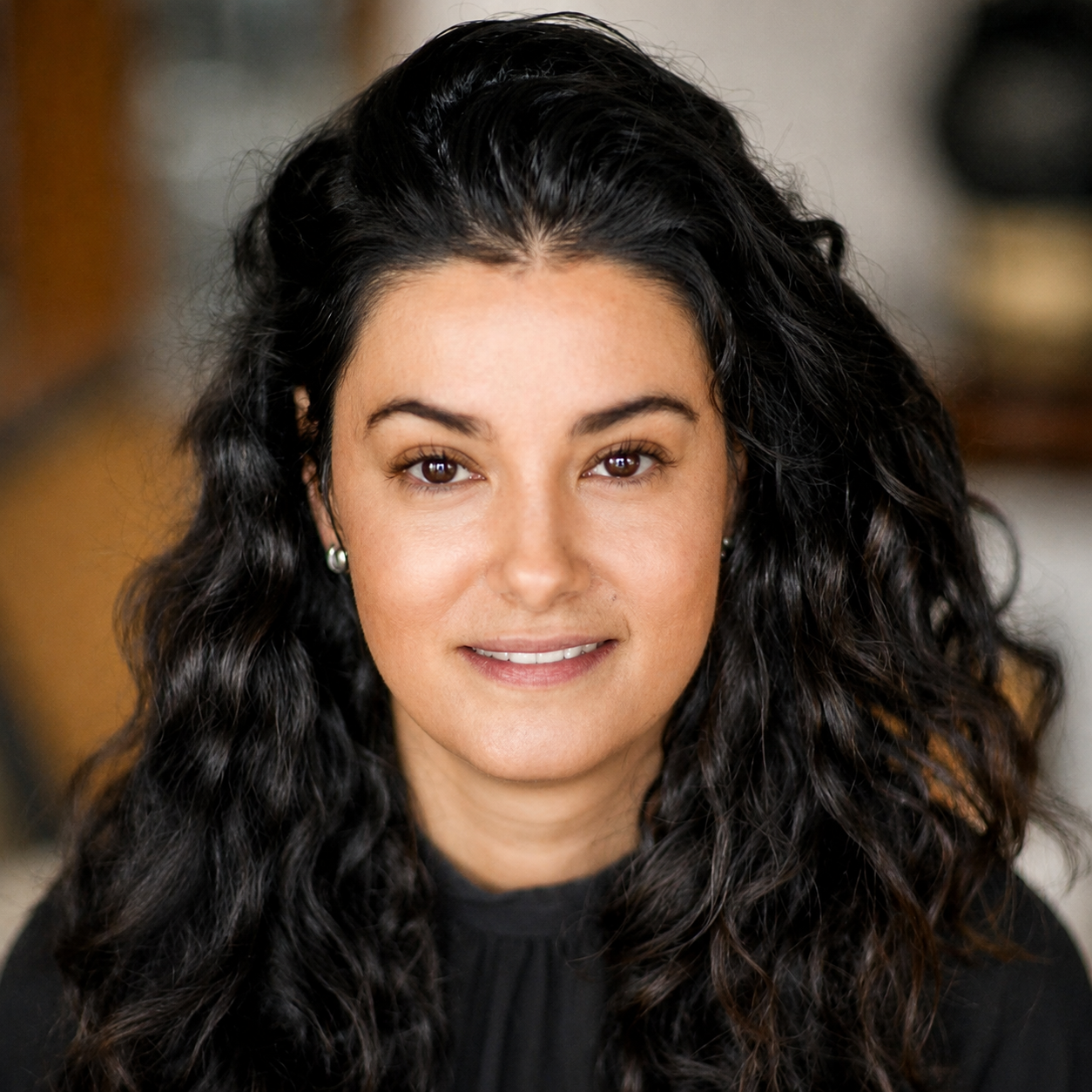
Transcript kept in the language it was spoken.Alright, welcome to the corridor. My name is Angel Leon, your host. Most people building fintech have never lived the problem they're solving. My guest spent seven years living it in the field. Victoria Tostado, she is the co-founder and CEO of Agxes, which is an AI platform basically rebuilding how farmers get access to credit.
Today a farmer trying to get a loan can wait thirty to ninety days, buried in paperwork, trying to translate the reality of their operation into financials a banker will be able to accept. Victoria was basically that farmer. Now with an MIT MBA and a Fulbright behind her, she's using AI to bridge the gap between the people who grow our food and the people who fund them. Victoria, welcome to the corridor.
Thank you. Thank you, Angel, for having me here and it's a pleasure to be with you and your audience.
Thank you, Victoria. So let's start where this really starts, right in the field. You were a farmer for seven years before you were a founder. Take me back to that. What was your own experience with agricultural lending? And when did you realize the thing that was frustrating you was actually a company waiting to be built?
Yes. So when we started this agriculture production site, we were looking for alternatives for financing. Agriculture is very intensive in capital. You ask for money several times in a year when you are starting for infrastructure renovation, harvesting season. So you have a lot of financial needs along the way.
And I remember when we were starting, we wanted to get these services. And we got these first conversations with bankers and they were like, yes. And they were coming to the site, we were giving them tours, showing them the infrastructure, our processes, how we were producing, basically explaining them everything.
And then after a complete day of a tour explaining, showing, they got back to the office and they said, hey, could you please basically fill out these forms for me, or explain what you explained to me just in these writing forms? So we understood, after spending all that time, basically one or two days with them, they were not able to translate our operations for their requirements, their financial criteria.
So we ended up doing it ourselves. And I believe that's most of the cases of the farmers — that we end up doing the work of the bankers because we have to translate all our details, because we have different seasons, different crops, different regions, different commercial agreements. So we have to turn all that into creditworthiness.
And on the other side, from 2019 to 2023, I was working as an independent consultant for a development bank. So I was in charge of bringing projects to them, basically projects that check a lot of boxes. Agriculture was one of these industries that was checking a lot of boxes. And I was talking to all these farmers and I saw that my problem was the same problem that they were having. And that's the main struggle, because without money, operations suffer.
From the bank perspective, I was explaining all of this and they were saying, hey, that's great because you know the industry, but how can we make sure that basically we can de-risk all these operations? And I realized that commercial banking was not going to do it, neither development banks or governments. So I saw the opportunity and I saw how global the need was for this.
Very cool. Walk us through what's actually broken. A farmer needs credit. Today that process can take anything from 30 to 90 days. Where does all the time go, and why has agricultural lending stayed this slow and so painful this long?
Yes, so it can take even more than ninety days, just to amplify the context. Like this could be super lengthy. And what is broken is that institutions, financial institutions, are under-lending to viable producers and overpricing uncertainty. And that's the core of the problem. Because lenders are suffering and the farmers are suffering too.
Where does that go? It's limited to human capacity. Some CRM usually put in place, and you have something once the loan is approved in the servicing part, but in the middle — where you take the data, where you analyze the basic data, where you basically try to match market prices and analyze commercial relationships and understand production and cycles and the crop — everything is done by hand. Everything is dependent on human capacity. How much information can a human process in a day?
And how much expertise do you have in your bank, in your human expertise? So if my bank or my community bank, credit union, CDFI only has one agronomer or one agronomic expert, and this person only has expertise in one or two crops, then your portfolio will be limited to those two crops. Therefore the exposure of your portfolio is extremely high, and basically it's not healthy what you are sustaining as a business.
So how can you diversify, lower the cost of capital? Because today, to analyze a loan can cost around $4,000. If we multiply $4,000 across the thousands of loans that each lender has in their portfolio, it is very easy to see why agriculture lending is the highest operational cost. So if you want to lower the cost of capital, if you want to de-risk your portfolio, you need more than just human capacity. And that's where Agxes is basically solving this problem for them.
This is the part I find sort of fascinating about what you guys are building. You've talked in the past about the difficulty of translating the operational data, what's actually happening on a farm, into the financials a banker needs to see. That gap is sort of the whole problem. How does Agxes actually close that problem, and what is the AI really doing?
Yes, so now with AI we can do things that let's say two or three years ago were not possible. Two, three years ago we were speaking about LLMs. Last year, this year we're speaking about agents. So that technology has enabled us to build something that is agentic workflows. We have an engine that is built on agentic workflows. Each process that you do today can be transformed into an agentic workflow.
So now the information flows automatically and we bring alternative data too. You have trusted your underwriting procedure for basically decades. And we're not trying to change that. But what we want to do is to enhance the credit quality by doing that efficiently and bringing more sources of data to actually verify, reassure, and de-risk your decision.
For example, underwriting water — how much water does the farmer have? This is very important because if you are planting watermelons and you do not have enough water, doesn't matter what else you have. The risk of going into a non-success harvest is super high. So we have to understand other parameters beyond financials and legals to have a good credit quality decision.
So that's what we're doing. We're bringing new sources of information and we are enhancing your actual process with AI. We are using different techniques like machine learning, we are using LLMs, we are using satellite imagery, we're using visual language models, we are using OCR. So it depends what the process is that we're going to tap into different techniques of AI to make it better, more efficient, and improve the quality.
Financial institutions are under-lending to viable producers and overpricing uncertainty. That is the core of the problem.
Take us into the product now. On one side you have the farmer, on the other side you have the banker. What does Agxes actually do for each of them? Walk us through what changes when a lender or a farmer starts using it.
So let's start by defining that we are the AI lending infrastructure for agriculture. Our customers are the lenders. We are helping lenders to reduce risk, increase their profitability, and accelerate decision making by ninety-five percent.
We take the farmer's traditional data — when they go to an institution and ask for a loan, they have to provide certain information. So we take that information, which is how the process actually goes today, but we also bring scattered technical data that is available out there. We aggregate all this information, we organize it, and we analyze it through our Agxes AI engine. Then we enable the lender to take the lending decision. And then once the loan is approved, it can be deployed through our farmer's wallet.
Our farmer's wallet is an expense management card that is controlled. So now we match analytics with the behavior of how the money is being used. With that information — analytics plus the farmer's wallet — we create an intelligence layer, basically matching all this information and creating a new set of data that today doesn't exist.
With that data, we make it more attractive for lenders to join. And bringing more lenders into our system also brings more farmers. So that's how the flywheel goes and how it's a virtuous cycle.
This is a very hard place to build. Agriculture is old and slow to change, the lending side is heavily regulated, and on top of that you're building across Latin America and the US. So what's actually been the hardest part — the technology, the regulation, or earning the trust of an industry that doesn't move fast?
Let's say our biggest competition today is the status quo. So basically doing things by hand. And as with every change in history, you have to first educate your customers, you have to first educate your partner. And that's how we start, basically. We prove immediate ROI and then we bring the rest of the value that we create.
And why we're building in these geographies is because the industry is global. The market will not disappear. On the contrary, it will grow because every one of us eats. So this is how important the industry is. But yes, you're right. We have to start by showing that we know what we're talking about, show the trust, show a clear ROI. And we have been able to do that, and we plan to keep growing.
You've gone from the field to MIT to Fulbright to building Agxes. That's an unusual path. What has this journey taught you that you didn't expect, and what's been the hardest moment — the one where you weren't sure it would work?
Well, I was sure this was a problem, as I said, because of my own experience. I didn't know how big it was going to be. When I started at MIT, I focused basically all my time in making sure this was something worth pursuing. So I interviewed around one hundred and fifty to two hundred people — between bankers, AI experts, entrepreneurship. I did the MIT delta v entrepreneurship accelerator. So I made sure that this was a huge problem to solve.
And then what was surprising is that the problem is basically the same in every latitude. Probably the solution can be tweaked here or there to adapt to regional conditions. But the problem is exactly the same. So this was good news, because whatever solution you build in one geography could be basically scaled into other geographies, just doing small tweaks.
Something that I like very much is that whenever I am explaining something, I think of it like I'm a doctor. When you go to a doctor and the doctor tells you, you should take these meds, you want to understand why. You want to understand what's wrong and how they are going to help you. So basically that's what I do. When I sit with a banker, with a community bank, with the CEO of a bank, and they are trying to understand — do these guys really understand my business? That's when we basically click. Because as we are explaining the problem, the guy is like, you understand very well what's our problem.
But that wasn't by any chance. I was years in the industry and then I spent like a hundred interviews making sure this was something to be pursued. That's how you gain trust — by showing them that you understand very well their problem, that you want to help them, and that the solution you have created is actually a win-win for everyone. Because if it's a win for them and it's not a win for their customers, the farmers, this is not going to work. In the end, what you create is a larger pie for everyone. There's no other way if you don't share the benefits. The farmers have a better user experience, they have faster responses, they know what is required, and they know how they can improve their score for next time. But also the lender has new ways to create new sources of income, because now they know much more about their farmer than before.
Walk us back to when you were a farmer. What did that look like? Where was it, what did you grow, and do you still do it? Because going from working the land to a technology industry is sort of the opposite, if you look at it that way.
Yes, well, let's start with our greenhouse. We have a greenhouse in the center of Mexico, in San Juan del Río, Querétaro. We produce tomatoes — we have produced grape tomatoes, Roma tomatoes — for the export market. We also have land where we grow trees of limes, also for the export market.
What I love about that is that you can see the work. You can touch your work and you can see the people and you can actually see, this is going to be in a supermarket basically. And when I am in the US and I see these things in the supermarkets, it's like, they come from Mexico. Maybe those are mine, I don't know. But it's great, that satisfaction of seeing the actual work and how you actually grow things, the effort that is put there — how you choose your fertilizers, how you manage operations. It's so rewarding.
We still have the business, and it's great to be able to go back and link everything, your whole experience. But also when I was in these years of 2019 to 2023, I knew I wanted to do something at a different scale. So I was the first citizen to create, or be the leader of, a long-term economic development plan for my state. I brought together the development bank, the government, the private sector to create something better for my whole state, because the economic situation was not good and that was affecting everything.
I think in a systemic way. When the situation is going down, then criminality goes up, then economic activity goes down, employment goes down, and everything suffers. So I was like, we should change this. And that's where I envisioned myself making impact at a greater scale. So having this company — it's good, it's still good — but the vision and the ambition is now to have impact at a global scale.
In terms of how you guys operate, is this an industry that is easy to get into? For any founders out there interested in building in an industry that is not traditional, not that glamorous or luxurious for that matter — but there are opportunities, and like you said, it's the industry that feeds the world, and sometimes overlooked in many different ways. What would you tell a founder or someone that has an idea and wants to get into this industry?
For anyone trying to get into this industry or any industry that is not so shiny — if you have a passion for it, go for it. I would say there are more opportunities in overlooked markets because you can create your own opportunity. You can be the leader of a category, you can make a difference. When you're competing among thousands of others, it will be harder — probably more shiny, but harder.
Usually the industries that are not shiny are the ones that keep moving our world — either manufacturing or agriculture or construction or everyday labor. And they are hard, yes, because they are so essential in our society that they have a long tradition. They are so entrenched in traditions, but that doesn't mean they don't need change, they don't need innovation. That doesn't mean opportunities don't exist. On the contrary, I would say those are where opportunity exists the most.
But you need to be well aware of the domain expertise that is required. You have to be very passionate because it will require time and effort. And once you get there, the same barrier — because it's difficult to enter, it's the same barrier that you will maintain or sustain against some of your competitors. So it's strategic thinking, but yes, you have to know it well to be able to provide a solution for an industry that is so essential, that has so many legacy systems.
Exactly. And I like that you mentioned it's basically industries that keep moving the world. One of the things I miss the most about where I'm from in Puerto Rico is that we used to have this little house in the mountains, and every other weekend or so we would go to this house and it was very secluded. Everything you would plant would grow. It was very virgin soil and ground. I remember going around with my sister, picking up berries and passion fruit and guavas and all kinds of stuff.
And even though we never sold anything, it was just for ourselves, it was very rewarding just to pick it up knowing that you planted that, it grew because of your work and your constant care of it. It helps you connect a little bit more nowadays, when things are moving so fast. That's one of the things that I sort of enjoy and remember the most about my childhood — those moments planting things and picking things up that we grew ourselves.
So I appreciate what you guys are building. What you guys are solving is a true problem. There's a lot of these industries that don't have much glamorous things, but they need constant innovation as well. A lot of them are set in their old ways, but that's where the opportunity is. So I really appreciate you, Victoria, being on the show. This was great, getting to know what you guys are doing with Agxes. But before we go, share with people where to find Agxes. Recap again a little bit what Agxes is, where to find it — the website, the socials — and where to get in contact with you.
Yes, thank you, Angel. What I like of what you just said is when you felt that connection, I have felt it too. And as I said, that's something that digitalization does not give you, but it gives you concrete work. So I like that of your story. Thank you very much for sharing.
So Agxes, as we were saying — we are the AI lending infrastructure for agriculture, helping lenders reduce risk, increase profitability, and accelerate loan decisions by ninety-five percent. You can find us on our LinkedIn, in our official page of Agxes. You can find me also on LinkedIn, Victoria Tostado Bringas, and we can connect through that. And also our website is agxes.com. So I will be glad to talk to you and share with you more about what we're building.
Thank you, Victoria. Thank you again for being on the show and taking the time to share your story with me and the audience. Thank you for everyone listening to this. This was The Corridor and my name is Angel Leon, your host, and today's guest was Victoria Tostado, co-founder and CEO of Agxes. Thank you. Thank you.
Corridor Context
Victoria Tostado is the co-founder and CEO of Agxes, the AI lending infrastructure for agriculture, helping lenders reduce risk, increase profitability, and accelerate loan decisions by up to ninety-five percent. A farmer for seven years in San Juan del Río, Querétaro, growing export tomatoes and limes, she later consulted for a development bank, led a long-term economic development plan for her state, and validated Agxes through MIT's delta v accelerator, an MIT MBA, and a Fulbright.