

The two percent problem nobody wants to say out loud
Inside the number every Latino VC conversation ends up citing — and the mechanics behind it. On misread risk, missing networks, and why the pre-seed gap is the one that matters.
Transcript
Transcript kept in the language it was spoken.All right. Welcome to The Corridor. I'm Angel León, your host, and this is the show where we sit down with founders, investors, and builders shaping the future of Latino innovation — and we talk about what it really takes to bet on the people the world tends to overlook. Today I'm with David Olivencia, one of the people actually building the infrastructure to write those checks. David, introduce yourself to the audience — who you are and what you do.
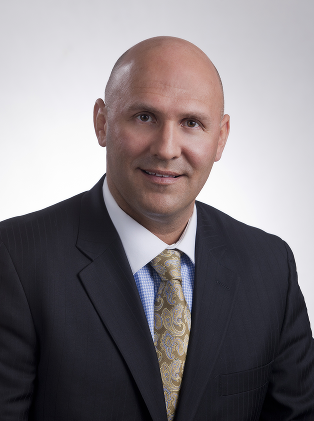
Thank you, Angel, for having me and pulling this podcast together. Quickly about me: born outside of Chicago, in the Indiana suburbs. All my family is from Puerto Rico. I was the first in many things, but I took the technology route — became an engineer, then a senior technology executive across multiple Fortune 100s. I got an MBA from Notre Dame, fell in love with startups, and started investing about fifteen years ago. I've invested in about eighty different startups. Along the way, I've been very involved in nonprofits within our community — business-related, technology-related — founded some and grown them. HITEC, for example, one of the leading technology leadership organizations in the world.
About six years ago I decided, with several folks, to co-found Angeles Investors. Our mission is to leverage the power of Latino growth to find, fund, and fuel the best ventures in America. We've done that for six years now. We're one of the largest and fastest-growing angel investing groups in America — about 700 members and 30 sponsors, including some of the top banks, law firms, accounting firms, and tech firms. We have a strong portfolio of about 30 companies.
Then, about three years ago, myself and one of our co-founders, Adela Cepeda, became general partners of a venture fund we launched. That fund is backed by Bank of America, the State of Illinois, and about 90 other limited partners. The fund has done about ten investments so far, and we're looking to do another ten in the next year or two. I also serve on two corporate boards — Surge Communications, a broadband tech, family-owned company, and Old Plank Trail Bank, a charter of Wintrust Bank, a regional bank out of Chicago. And I'm an author — I wrote a book called Networking and Net Networking Excellence about three years ago. People kept telling me I was good at networking, so I wrote the book on it.
You could have done a lot of different things with your career — with your corporate background, building capital infrastructure for Latino founders specifically doesn't seem like the obvious next step. What's the real reason? What happened that made this the thing you couldn't walk away from?
We looked at the growing demographics in America and saw a couple of things. The founders of Angeles have amazing networks in the Fortune 500 and beyond. We had amazing networks, amazing insights, amazing experience — but we saw very few startup founders within our community were getting funded. We're relatively new to the country in general, so it's not like we have friends-and-family checks that can cut startup money to startups. We decided there was a void to fill.
But this is by no means charitable. We think there's a huge opportunity to leverage the power of Latino growth to find, fund, and fuel the best ventures in America. We think we can generate outsized returns — better than the returns of some of the other venture capital firms out there. The thesis is still being proven out. We'll see if we're right. But we think we can give our investors a better return than traditional venture firms.
What do you think is the part you understand better about the Latino market and Latino founders that others don't?
Some of the founders we invest in may not come from the right schools. They may have a little bit of a different accent. They may have only spent a few years in the United States. For some venture firms, that reads as too risky. We are all in the business of minimizing risk, so some venture firms see that and pass. We believe they're passing on a lot of good opportunities from leaders within our community.
The second piece is networks. Whether you're a startup or an investor, this business runs on networks and who you know. A lot of times in our community we're not always going to the right schools. We don't always have the network of startup founders around us. In pockets we do — but that's an area where we've historically lacked, and it creates challenges.
Everyone cites that stat — less than two percent — and you basically live inside that number, because that's your market. You see the deals, you write the checks. What do you think that statistic gets wrong? Is the problem really access to capital, or is it something further upstream nobody wants to say out loud?
In today's environment, very few deals are getting funded with mega capital — that wasn't necessarily the case five or ten years ago, when it was a little more distributed. Now if you're in that handful of deals getting mega-funded, that's going to sway the capital as well.
It really goes back to my earlier point. Some founders are just getting passed up by venture firms. I wouldn't call it directly that people don't want to — venture firms in general are looking for great returns for their investors. But where the two percent happens is: where are you going to place your bets, or double down, or reinvest when a company needs reinvestment? That's where it shows up.
You gotta pick a thesis you believe in, that you can defend, that you're gonna pitch investors on — where they'll believe in you and why they should give their hard-earned money to you versus all the other alternatives.
Where do you see the Latino startup ecosystem, or at least the Latino VC side of things, in the next ten years? What needs to happen in ten years for that number to grow?
It's a good question. There's a handful of venture firms focused specifically on Latino growth. There's another handful that indirectly look to invest in diverse or representative founders. But it's not a lot. Let's say it's ten firms, and being aggressive, let's say they have a billion dollars amongst them to invest.
That's barely putting a dent. The industry raises about three hundred billion dollars a year in venture, and probably five companies are getting two hundred billion of that. The rest is spread across lots of other ones. So a billion dollars across ten Latino-focused firms is about one percent — if they were to deploy it all, which they don't.
If the goal is just for Latino founders and co-founders to get funded representative to demographics — Latinos are projected to make up thirty to forty percent of the US population — that's going to naturally get closer over time. Demographics will move it. But the real lever is building more Latino general partners, more people who see venture capital as a viable career path — right now that number is around one percent, roughly as small as the funding gap itself. That means exposing more people in the community to the asset class and to what a career in venture actually looks like.
Our firm and our fund — the angel group and the fund — are really at the seed stage. Roughly ninety percent of the startups we see are operating at this pre-seed phase, trying to get to seed. Ten percent of them get to seed, and then it's like one percent — probably less — that get to Series A.
The pre-seed is where there is a gap. If you're just looking at investing in pre-seed startups that have a focus on Latino growth — whether it's the founding team or a market they're going after — you're going to have to pitch investors who may not be Latino themselves, because there are so few funds operating at that earliest stage. For example, we really don't do pre-seeds. Of the ten or so Latino-focused firms, only a handful do. It is the hardest stage, and it goes back to the point: you don't have a bunch of friends and family that can seed you.
One of the benefits right now is that with AI the cost to kick off a startup, get it going, and scale it has dropped dramatically — and keeps getting cheaper. What you can do with the capital is a million times more impactful than five or ten years ago. Per fifty thousand of investment, per hundred thousand of investment, what you get out of it now is a heck of a lot more.
This is a question I asked another VC in an earlier episode, and I wanted to hear your thoughts too. Artificial intelligence — how is that affecting the VC industry, positively or negatively? Where do you think it's going in terms of how VC uses AI? And on the flip side: is AI affecting how you source through deals? How do you tell what's a real deal and not just an auto-generated startup?
For every function in our venture firm — and even our angel investing group — we're embedding AI. Sourcing, marketing, investor relationships, portfolio review, portfolio support, everything. You can always do more. We're doing a good job, but every company in America should always be doing more, because it keeps getting smarter and you can keep throwing more at it.
On the deal-flow side — I haven't seen a pure, straight-up AI pitch. Startups are surely using it to create their pitches, but there's a founder behind everything we see. Using AI to source deals is good. Like any tool, you have to use it the right way — put the right intelligence and parameters and rules around it, and improve it over time.
What's interesting is that if you look back five or ten years, a startup was a team — you had a business founder and a technical co-founder, and you built out a team of four, five, six humans to get the startup off the ground. This past year, roughly half of the Y Combinator cohort were solo founders — leveraging the hell out of AI. What's coming next is what you alluded to: a pure AI startup where the AI is running everything. Maybe it has an owner, but it's basically a fleet of agents solving a business problem, transacting, all of that. In a couple of years, maybe fifty percent of startups will be solopreneurs and pure AI startups — some investors, an owner, and a board to help with decisions.
This show is called The Corridor because capital, talent, and ideas should move both ways — and right now it seems most of it is going one way. What needs to be true for everything to flow back and forth — not just capital, but talent, resources, infrastructure, access?
There isn't one solution. We have members in Latin America. Miami is a really good example — what they're doing with eMerge Americas and the event they have there. I'm getting contacted by various family offices in Latin America and asked to speak on venture and innovation. The bridges we naturally have will help — because it's an education thing too. I was in Colombia last week speaking with a family office.
If you think about investors in the United States, for the most part they're very open to venture — especially on the coasts. In Latin America, venture is a very, very small part of their portfolio, if any. It's outside the traditional: real estate, businesses, some small businesses, some equities, farms. There's a bit of education that needs to happen around the asset class — the risk-reward profile, how you pick startups, the time horizon. It's high-risk, high-reward, and a long time. It's not that liquid.
What about the cultural aspect? One of the things I feel — and this relates more to Coquí Ventures specifically — is that the general Latino message may not always be received by our culture specifically. How do you see culture right now within the Latino community, and do you think culture should be more of a thesis for more VCs now?
It depends. If you're a VC, you've got to pick a thesis you believe in, a thesis you can defend, and a thesis you're going to pitch investors on — where they're going to believe in you and the thesis, and why they should give their hard-earned money to you versus all the other alternatives. That's how it works.
Now, it could be any culture, anything — but you've got to have those components for success. And by the way, you don't necessarily have to be part of that culture to get the business case for it and understand why you'd believe in the thesis. For example, I could be pitched an Alaska-based fund with a thesis around energy or tourism, and I could look at the elements of the thesis: does it make sense, is it growth, do they have a track record. I'm a general partner in a couple of other funds, and none of them have anything to do with a cultural angle. So if you're going to create a fund focused on, say, Puerto Rico or the US mainland Latino community, you've got to have those components for it to be successful.
David, I know you've got to go soon, so I don't want to take more of your time. I really appreciate you telling your story, sharing your thoughts on a bunch of different topics, and showing the work that you're doing in the corridor. Last thing — how can people contact you? Access is one of the most important things for this show.
I'm on most of the socials. LinkedIn a lot. I'm on X at @DOlivencia. I have a website — davidolivencia.com — with more information on the book, my speaking, and all of that. And obviously Angeles Investors and Angeles Ventures — you can follow us there across the website. LinkedIn is primarily where those are handled.
Thank you, David. I really appreciate it. And to the audience — everyone listening — this is The Corridor. I'm Angel León, your host, and this is the show where we sit down with the founders, investors, and builders shaping the future of Latino innovation. Thank you again, David, for your time. And to everyone out there — thank you for listening.
Thank you.
Corridor Context
Angeles Investors is one of the largest and fastest-growing Latino angel investing groups in America — roughly 700 members, 30 sponsors, and a portfolio of about 30 companies. Angeles Ventures, the associated fund, is backed by Bank of America, the State of Illinois, and roughly 90 other limited partners.